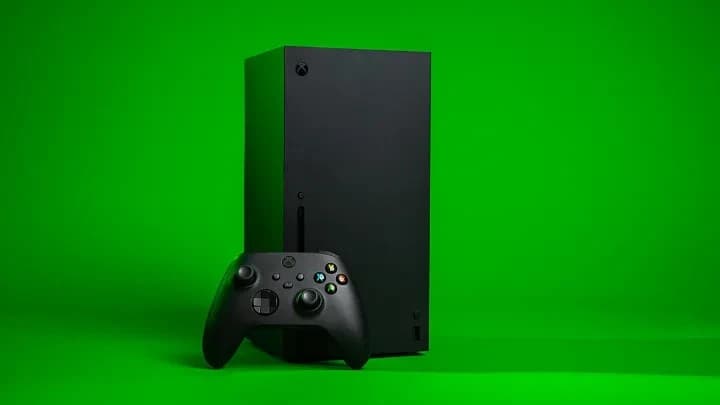
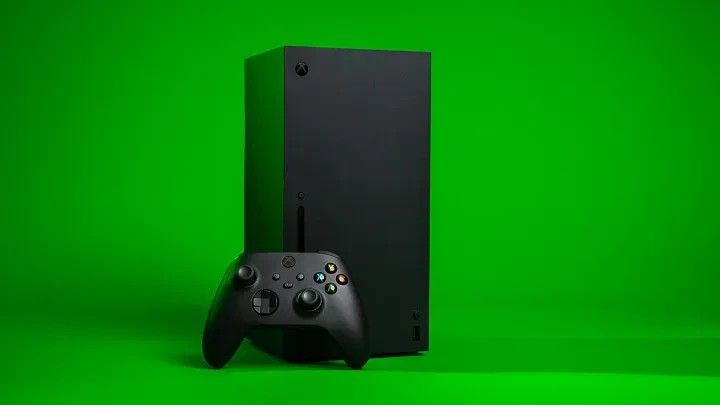
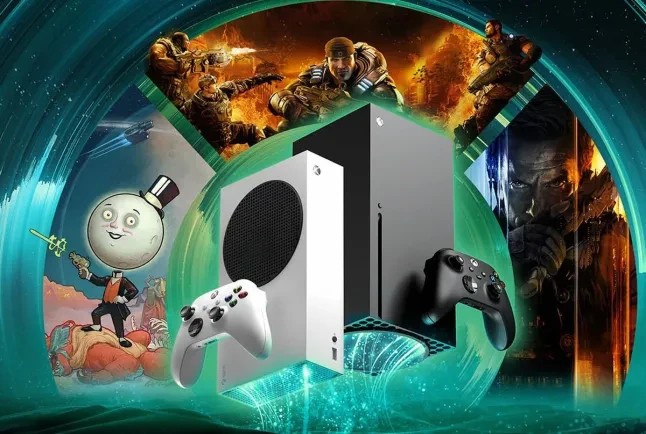
Xbox Series X — sold 1.7 million units in 2025. Less than the original Switch.
On July 2, 2025, Microsoft announced 9,000 layoffs. Among the casualties: The Initiative—shut down entirely before shipping a single game. Perfect Dark—canceled after years of development. Everwild—canceled. A ZeniMax Online MMORPG that Phil Spencer reportedly "couldn't stop playing" during internal demos—canceled, with the team learning via Slack deactivations.
Fifteen thousand three hundred employees lost their jobs in 2025 alone.
Five months later, on December 22, Phil Spencer received the Industry Icon Award at The Grand Game Awards. The show opened by acknowledging the year's massive layoffs. Then they handed Spencer a trophy.
The layoffs weren't unfortunate side effects of market conditions. They were consequences of deliberate choices made by specific people—Phil Spencer, Matt Booty, Sarah Bond—over multiple years. Choices about Game Pass economics that never made sense. Choices about which studios to close despite their success. Choices about what Xbox means when hardware becomes irrelevant.
Forget "strategic pivots." Forget "market conditions."
This is how executives destroyed a brand while collecting awards and telling everyone it was inevitable.
The Hardware Numbers: A Collapse, Not a Pivot
Start with what Phil Spencer won't admit: Xbox hardware is dying because Microsoft stopped giving consumers reasons to buy it.
2025 console sales (VGChartz estimates):
- Nintendo Switch 2: 10.36 million units (launched June 2025)
- PlayStation 5: 9.2 million units
- Xbox Series X|S: 1.7 million units
- Original Nintendo Switch (2017 model): 3.4 million units
Xbox sold fewer consoles in 2025 than an eight-year-old Nintendo product that's been commercially obsolete for a year.
U.S. market decline:
- 2023: 3.8 million units
- 2024: 2.7 million units (down 29%)
- 2025: 1.7 million units (down 37%)
European collapse:
- 2024: 550,000 units
- 2025: 290,000 units (down 47%)
Microsoft's own financial disclosures:
- Q2 2024: Xbox hardware revenue plunged 42% year-over-year
- Hardware sales declined in six of the last seven quarters
- Daniel Ahmad (analyst) estimate: Fewer than 900,000 Xbox units shipped in one quarter when PlayStation shipped millions
When an eight-year-old Nintendo product outsells your current-gen hardware, you haven't "pivoted to services." You've failed to give consumers a single compelling reason to buy your product.
Retailers noticed before gamers did.
Costco Stopped Stocking Xbox
In mid-2025, reports surfaced that Costco stopped carrying Xbox Series consoles in multiple U.S. locations.
Big-box chains don't pull products because of "industry trends." They pull products that don't sell. Costco's floor space is precious—every square foot has to earn its place. If Xbox consoles sit on shelves, they get replaced by products that move.
Microsoft declined to comment. Of course they did.
Notice what's missing? Any acknowledgment that their strategy created this outcome. Spencer's been saying since 2023 that Microsoft isn't "in the business of out-consoling Sony or Nintendo." That sounds like strategic clarity. It's actually an admission of defeat dressed up as vision.
Game Pass: The Economics Never Made Sense
Game Pass was supposed to be Xbox's salvation. The "Netflix of gaming." The future of the industry.
Instead, it bled money, hollowed out the console business, and gave Microsoft an excuse to close every studio that didn't deliver blockbusters.
Xbox Game Pass — 35M subscribers vs 50M target. Microsoft stopped reporting counts.
Subscriber numbers:
- January 2022: 25 million (last official Microsoft disclosure)
- February 2024: ~34 million (analyst estimate)
- Mid-2025: ~35 million (analyst estimate)
That's 1 million subscribers added in 15 months.
For context: Microsoft's internal target was 50 million by 2025. They missed by 15 million—30% below target.
After hitting 25 million in January 2022, Microsoft stopped reporting subscriber counts. Companies don't hide numbers when they're good.
What Game Pass Actually Costs
Bloomberg estimated Microsoft spends $1 billion annually on third-party Game Pass content alone.
Leaked FTC trial documents revealed specific costs:
- Assassin's Creed Mirage: $100 million to launch on Game Pass
- Star Wars Jedi: Survivor: $300 million
- GTA IV: $120-150 million annually just to keep it on the service
- Call of Duty: Black Ops 6: $300 million revenue loss due to cannibalized full-price sales
Analysts estimate Game Pass runs at 10-15% profit margins—razor-thin for a service Microsoft claims is the future of gaming.
Sony's PlayStation Plus, by comparison, runs at approximately 50% profit margin because they don't hemorrhage money paying publishers $300 million per AAA game just to say "it's on Game Pass day one."
Industry Developers Called It Out
On July 5, 2025, Raphael Colantonio—founder of Arkane Studios (Dishonored, Prey)—posted on X:
"I think Gamepass is an unsustainable model that has been increasingly damaging the industry for a decade, subsidized by MS's 'infinite money', but at some point reality has to hit."
Plain English: "Microsoft's been losing money on this for years, and everyone knows it."
Michael Douse, head of publishing at Larian Studios (Baldur's Gate 3):
"'What happens when all that money runs out?' is the most vocal concern in my network."
Both developers pushed back against Xbox's claim that Game Pass doesn't cannibalize sales. Activision itself—now owned by Microsoft—stated in leaked FTC documents that subscription services "severely cannibalize buy-to-play sales," especially for day-one releases.
Guillaume Broche (Clair Obscur: Expedition 33 developer) launched on Game Pass specifically for exposure but noted in August 2025: "Game Pass doesn't help with sales." The exposure was valuable. The revenue wasn't.
Game Pass was always a loss-leader designed to lock players into the Xbox ecosystem. The problem? It locked in 35 million subscribers while bleeding hundreds of millions and cannibalizing full-price sales.
Microsoft's worth $3 trillion—they can afford to subsidize Game Pass indefinitely. But "can afford to" and "willing to continue" are different things.
The price hikes—two in 15 months—aren't about "adding value." They're panic moves trying to make broken economics barely sustainable.
You're not a subscriber. You're a subsidy. Microsoft built a service that loses money on every user, then closed the studios that were supposed to make it worth paying for. Now they're raising prices on what's left.
This isn't market forces. This is a choice that didn't work.
The Studio Massacre: May-July 2025
Between May and July 2025, Microsoft conducted one of the most brutal studio purges in gaming history.
And the people responsible—Phil Spencer, Matt Booty, Sarah Bond—couldn't explain why.
May 7, 2024: The Bethesda Bloodbath
Xbox Game Studios head Matt Booty sent an email announcing the closure of four Bethesda studios:
1. Arkane Austin (Prey, Redfall)
- Prey: considered one of the most underrated games of its generation
- New immersive sim project in early development—canceled
- Studio closed
2. Tango Gameworks (The Evil Within, Ghostwire: Tokyo, Hi-Fi Rush)
- Hi-Fi Rush: critical and commercial success—3 million players, "Overwhelmingly Positive" Steam reviews
- Aaron Greenberg (Xbox VP of marketing) called it a "breakout hit" in 2023
- Tango was pitching Hi-Fi Rush 2—never got the chance
- Studio closed
3. Alpha Dog Games
- Mighty Doom shut down August 7, 2024
4. Roundhouse Studios
- "Absorbed" into ZeniMax Online Studios (effectively shut down)
Booty's email justified the closures as "prioritizing high-impact titles and further investing in Bethesda's portfolio of blockbuster games."
What they said: "Prioritizing high-impact titles."
What it means: "We're only keeping studios that can deliver massive hits on Game Pass margins. Mid-budget successes don't matter anymore."
The Town Hall Where They Had No Answers
Following the announcement, Xbox held an internal town hall. According to Bloomberg's reporting:
- Booty could not explain why Tango Gameworks was shut down despite Hi-Fi Rush's success
- He claimed Arkane Austin's closure was not tied to Redfall's failure
- He suggested both studios were closed because they'd "just shipped games and wouldn't release another for several years"
Sarah Bond (Xbox president) was asked directly why Hi-Fi Rush's success didn't save Tango. Her response:
"One of the things I really love about the games industry is it's a creative art form. And it means that the situation and what success is for each game and studio is also really unique. There's no one-size-fits-all to it for us."
Read between the lines: "I have no good answer, so I'm going to say something that sounds thoughtful but means nothing."
You don't shut down a studio that just delivered a hit game because of "market conditions" or "strategic realignment." You shut it down because creative success doesn't matter if it doesn't generate Game Pass subscriber growth or massive revenue.
The excuse that they "wouldn't ship another game for years" is absurd—that's literally how game development works. By that logic, Naughty Dog should be shut down every time they finish The Last of Us.
Booty and Bond couldn't justify these closures because there is no justification. They killed functional, profitable studios to make quarterly numbers look better.
Matt Booty's job title is "Head of Xbox Game Studios." His job in 2025 was closing them. He's still in that role. That tells you everything about what Microsoft values in leadership.
This was a choice. Made by specific people. With consequences for thousands.
July 2, 2025: The Biggest Wave
Microsoft announced 9,000 layoffs globally, bringing 2025's total gaming-related cuts to over 15,300 employees.
Major casualties:
The Initiative
- Shut down entirely—before shipping a single game
- Perfect Dark (reboot) canceled after years of development and partnership with Crystal Dynamics
- One developer later claimed the Perfect Dark gameplay trailer shown at events was "fake" or heavily misrepresented
ZeniMax Online Studios
- Unannounced MMORPG canceled
- Phil Spencer reportedly "couldn't stop playing it" during internal demos
- The team learned about the cancellation through Slack deactivations—not leadership communication
Everwild (Rare)
- Canceled after years in development
343 Industries (Halo developer)
- Significant layoffs despite years spent fixing Halo Infinite's troubled live-service model
Think about that ZeniMax MMORPG for a moment. Phil Spencer—the man making these decisions—couldn't stop playing it. He loved it. And he canceled it anyway.
Then the team found out via Slack going dark.
That's how you tell hundreds of people their project is dead: by removing their access before telling them why.
Why Microsoft Doesn't Sell Studios
After Tango Gameworks closed, many asked: why not sell the studio instead of shutting it down? Employees keep jobs, Microsoft recoups investment, the studio survives.
The answer is intellectual property.
Microsoft wants to keep the IPs—Hi-Fi Rush, Dishonored, Prey—even if it means killing the studios that created them. Selling the studio means selling the IP.
Microsoft values IP ownership over developer livelihoods. They'd rather let Hi-Fi Rush rot in a vault than let someone else profit from it.
As The Gamer noted:
"Despite all its blubbering about wanting to diversify the kinds of games getting released and support studios doing cool stuff, Microsoft would rather kill the studio that made a successful game like Hi-Fi Rush than let someone else profit from the IP."
They don't close studios because they have to. They close studios because they want the IP without the ongoing cost of keeping the people who made it.
The Human Cost: An Open Letter Nobody in Power Acknowledged
On October 10, 2025, 93 former Xbox employees signed an open letter condemning Microsoft's leadership.
The letter alleged:
- Systemic mistreatment
- Mismanagement
- Mishandling of redundancy processes
- Toxic workplace culture
- Concerns raised to leadership were dismissed or mocked
They demanded:
- Public apology from Phil Spencer and Matt Booty
- Proper compensation for laid-off employees
Same day: The Independent Workers' Union of Great Britain (IWGB) sued Microsoft for mishandling layoffs.
Phil Spencer's response? Silence.
Matt Booty's response? Silence.
Sarah Bond's response? Silence.
Five months later, Spencer accepted an Industry Icon Award.
Ninety-three people wrote a letter. Zero executives responded. That's how much your voice matters when you're no longer on payroll.
Phil Spencer: Icon or Architect of Disaster?
On December 22, 2025, Phil Spencer received the Industry Icon Award at The Grand Game Awards.
The timing was grotesque.
The show opened by acknowledging 2025's massive industry layoffs. Then they gave an award to the man overseeing 15,300 of them.
Spencer's tenure as Xbox head (2014-present):
Wins:
- Saved Xbox from being shut down by Microsoft in 2014-2017
- Convinced CEO Satya Nadella to invest heavily in gaming
- Secured the $68.7 billion Activision Blizzard acquisition
- Launched Game Pass and Xbox Cloud Gaming
- Expanded Xbox to PC
Losses:
- Xbox Series X|S is the worst-selling Xbox console generation ever
- Game Pass subscriber growth stalled at 35 million (target: 50 million)
- 15,300+ layoffs in 2025 alone
- Multiple beloved studios shut down despite success
- Major projects canceled before release
- Console hardware in freefall
Community reaction on ResetEra:
"They started the award show by talking about layoffs then gave Phil Spencer an award!? LOL"
"Would Phil layoff coffee maker Phil back in the day?"
"Is the coffee maker on GamePass?"
Rumors about Spencer stepping down after the next Xbox console (rumored 2027) circulated in July 2025. Microsoft CCO Frank Shaw denied them.
But the damage to Spencer's reputation is permanent. The man who saved Xbox in 2014 will be remembered as the one who killed it in the 2020s.
Here's what nobody wants to say about Phil Spencer: his strategy made sense in theory—pivot from hardware to services, reach players everywhere, build a subscription model. But the execution has been catastrophic.
Game Pass doesn't make money. Hardware sales collapsed. And the studio closures destroyed what little goodwill Xbox had left.
Spencer is a visionary who can't execute the vision. Worse, he won't take accountability.
Instead, he accepts "Industry Icon" awards while presiding over 15,300 layoffs and canceling projects he personally praised.
At some point, "it's complicated" stops being an excuse and becomes a confession.
The pattern is unmistakable: Spencer takes credit when things work, blames "market forces" when they don't, and stays silent when 93 former employees demand accountability. That's not leadership—that's career management disguised as strategy.
What Xbox Actually Is in 2025
Phil Spencer's 2023 quote:
"We're not in the business of out-consoling Sony or out-consoling Nintendo. There isn't really a great solution or win for us."
Call that "strategic clarity" if you want. I call it surrender dressed up as vision.
Satya Nadella (Microsoft CEO) in a recent TBPN podcast:
"The company's gaming business model will look to be 'everywhere in every platform,' from consoles to TV to mobile."
Here's what that looks like:
- Xbox games releasing on PlayStation and Nintendo (Indiana Jones, Hi-Fi Rush, others)
- Next-gen Xbox rumored to be a "PC hybrid" that runs Windows
- Focus on Game Pass, cloud gaming, and PC rather than console exclusives
- Hardware becoming irrelevant
Valve's Steam Machine (announced November 2025) prompted The Verge to declare: "Valve just built the Xbox that Microsoft is trying to make."
Microsoft spent years and billions trying to build an ecosystem. Valve did it better without owning a console manufacturer.
The Collateral Damage
Xbox's collapse isn't just about one company. It's proof that consolidation doesn't create stability—it creates expendability.
1. Consolidation = Layoffs, Not Security
Microsoft spent:
- $68.7 billion acquiring Activision Blizzard
- $7.5 billion acquiring ZeniMax/Bethesda
Then they laid off over 15,000 people and shut down studios.
The message to developers: consolidation doesn't mean job security. It means you're a line item.
2. The Death of Mid-Budget Games
Studios like Tango Gameworks (Hi-Fi Rush) and Arkane Austin (Prey) made critically acclaimed games that didn't sell 10+ million copies.
Microsoft's "high-impact titles" strategy means: blockbusters or nothing.
Mid-tier, experimental games are no longer viable under Xbox. And when Xbox owns this many studios, that's a significant chunk of the industry that just lost creative space.
3. Subscription Models Don't Work
Game Pass was supposed to prove subscription services could sustain AAA development.
Instead, it proved the opposite: unsustainable economics lead to studio closures and layoffs.
Developers are now wary of subscription deals. As Larian's Michael Douse said: "What happens when all that money runs out?"
4. The "Multiplatform Future" Is Surrender
Xbox exclusives going to PlayStation isn't "pro-consumer"—it's a white flag.
Microsoft can't sell enough consoles to justify exclusivity, so they're becoming a third-party publisher while pretending it was the plan all along.
5. What Happens to Call of Duty, Diablo, Starcraft, Warcraft?
Microsoft now owns Activision Blizzard's massive franchises. If Xbox hardware dies entirely, those franchises survive.
But what happens to the teams that make them?
If 15,300 layoffs happened during Xbox's "most profitable year ever" (per Microsoft), what happens when profits decline?
The 2027 Question: Who Is the "Premium" Xbox For?
Microsoft is reportedly planning a next-gen Xbox console for 2027. According to CNBC and Digital Trends:
- "Open system" between console, PC, and cloud
- Likely a hybrid console-PC running Windows
- Focus on Game Pass and cloud gaming, not exclusives
- Sarah Bond (Xbox president) stated in October 2025 it will be "very premium"
Meaning: expensive.
Who is this for?
- Xbox fans who want traditional consoles? They're abandoning the brand.
- PC gamers? They already have PCs.
- PlayStation/Nintendo fans? They have no reason to switch.
- Game Pass subscribers? Most are already on PC or cloud.
A "premium" PC-console hybrid launching in 2027, after years of declining sales and studio closures, priced high in a market that's already rejecting Xbox hardware?
That's not a comeback strategy. That's hoping a rebrand will fix what product-market fit couldn't.
The Reckoning: This Was a Choice
Xbox in 2025 is a brand in crisis.
But it's not a crisis caused by market forces or industry trends. It's a crisis caused by deliberate choices made by specific people.
Phil Spencer chose to build Game Pass on unsustainable economics.
Matt Booty chose to close studios that delivered successful games.
Sarah Bond chose to offer corporate platitudes instead of accountability.
Microsoft chose to lay off 15,300 people while calling 2025 their "most profitable year ever."
Hardware sales collapsed. Game Pass growth stalled. Beloved studios shut down. Major games canceled before release.
And the leadership's response? Awards ceremonies and denials.
Microsoft decided Xbox—as a console brand—is no longer worth saving. They just won't say it out loud.
Game Pass will continue. Xbox games will release on PlayStation and Nintendo. Cloud gaming will expand. The Xbox brand will persist as a services platform.
But the Xbox console—the hardware that defined three generations of gaming—is dying.
And Microsoft's actions in 2025 prove they're not just okay with that. They caused it.
For developers: Success doesn't guarantee survival under consolidation. Hi-Fi Rush was a breakout hit—Tango Gameworks was shut down anyway. Critical acclaim means nothing if you don't fit the "high-impact blockbuster" model that Game Pass economics made impossible to achieve.
For players: The subscription dream is over. Game Pass was supposed to be gaming's future. Instead, it's a cautionary tale about unsustainable economics and corporate priorities that treat creative success as irrelevant.
For the industry: When the world's second-largest company by market cap (Microsoft is worth ~$3 trillion) can't make console gaming work, it's not because console gaming is dead. It's because they chose a strategy that hollowed out the brand.
Maybe Phil Spencer was right in 2023: there is no "great solution or win" for Xbox in the console space.
But pretending that was inevitable—instead of admitting it was caused by specific decisions made by specific people—is dishonest.
Xbox didn't fail. It was failed.
By leadership that chose Game Pass subscriber growth over sustainable business models. By executives who closed successful studios because they didn't fit arbitrary "high-impact" metrics. By a company that treated 15,300 employees as expendable while awarding their leadership "Icon" status.
This wasn't market forces. This was management failure at the highest level.
And they're still collecting awards.
Sources: CNBC, VGChartz, That Park Place, Pure Xbox, Windows Central, TechRadar, Digital Trends, NotebookCheck, Spilled, SQ Magazine, Game Rant, GameSpot, Game Developer, Kotaku, VGC, The Gamer, Gamer.org, Outsider Gaming, Outlook Respawn, Bloomberg, FTC trial documents, multiple analyst reports, ResetEra community discussions