Electronic Arts shareholders approved a historic transaction on December 22, 2025, and if you've been following EA's franchises—Mass Effect, Dragon Age, Battlefield, The Sims—you've probably got questions about what happens next. What we know about the deal structure, what it might mean for EA's studios, and which scenarios could change everything:
What We Know: The Deal Numbers
Electronic Arts shareholders approved the $55 billion sale of the company in a deal led by Saudi Arabia's Public Investment Fund, with investors approving the $210-a-share takeover in a vote Monday, December 22. Over 201 million votes were cast in favor of the buyout agreement, with fewer than 2 million votes opposing the transaction.
The breakdown: The transaction will be funded by approximately $36 billion in equity investment and $20 billion of debt financing fully and solely committed by JPMorgan Chase Bank, $18 billion of which is expected to be funded at close.
What this might mean: That $18-20 billion in debt now sits on EA's books. Based on fiscal year 2025 GAAP net revenue of approximately $7.5 billion, EA is carrying debt equal to roughly 2.4-2.7 times annual revenue. Companies with that kind of leverage typically need to prioritize projects with predictable cash flow and shorter development cycles.
From a gamer's perspective? Studios working on 5+ year projects with uncertain returns—like BioWare's Mass Effect 5—face more scrutiny than annual sports franchises.
How Leveraged Buyouts Actually Work
This differs fundamentally from Microsoft's $68.7 billion Activision acquisition, where Microsoft paid cash from its own reserves.
What we know: The buyout will see EA taken private in a deal worth $55 billion in total, making it the largest leveraged buyout in history. In a leveraged buyout (LBO), the acquiring company borrows money to fund the purchase, then places that debt on the acquired company's balance sheet. EA now needs to generate enough cash to service that debt while continuing operations.
The financial pressure: When you're servicing billions in debt payments annually, every dollar matters. Studios that generate recurring revenue—like EA Sports franchises—become essential. Studios requiring multi-year investments with uncertain returns become potential cost-cutting targets.
I know that sounds harsh, but it's how leveraged buyouts work. The people who borrowed $20 billion don't pay it back—EA's studios do, through their labor. Every dollar BioWare spends on Mass Effect 5 is a dollar that's not servicing debt. Every experimental project Respawn greenlights is scrutinized through that lens. The debt doesn't care about artistic vision. It demands cash flow.
Which EA Studios Face the Most Uncertainty
Lower risk franchises: EA is recognized for a portfolio of critically acclaimed, high-quality brands such as EA SPORTS FC, Battlefield, Apex Legends, The Sims, EA SPORTS Madden NFL, EA SPORTS College Football, Need for Speed, Dragon Age, Titanfall, Plants vs. Zombies and EA SPORTS F1.
Of those, the EA Sports titles represent the safest bets. They release annually, generate predictable revenue through live services, and have established audiences. The Sims also maintains consistent engagement with its player base.
Higher risk: BioWare's situation illustrates the challenge. Bloomberg reported in January 2025 that EA restructured and downsized BioWare, with the studio now down from more than 200 people two years ago to less than 100. PC Gamer highlighted that well-known BioWare veterans are no longer at the company and collectively, the cuts represent a major loss of creative talent for the studio.
What we know about Mass Effect 5: Multiple reports indicate the game remains in pre-production, meaning years away from release. When you're carrying substantial debt, a studio with under 100 employees working on a game 5-7 years from launch creates obvious tension between long-term investment and short-term cash flow needs.
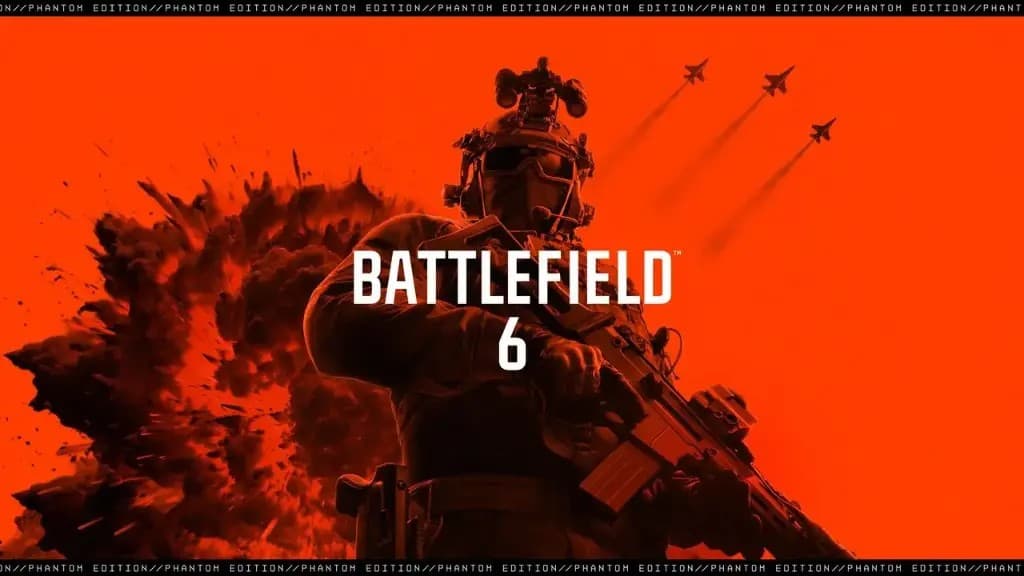
Battlefield's multi-studio approach: Battlefield Studios is comprised of DICE, creators of the Battlefield franchise; Ripple Effect, a studio led by franchise veterans; Motive, the developers of the critically acclaimed Star Wars Squadrons and Dead Space; and Criterion Games. DICE is leading the charge on multiplayer, while Motive has been tasked with the next Battlefield game's single-player campaign, with Criterion driving content and experiences across single player and multiplayer.
What this might mean: Spreading Battlefield development across four studios suggests EA views the franchise as critical—worth significant investment despite recent stumbles with Battlefield 2042. But it also means if Battlefield 6 (launching December 2025) underperforms, the financial pressure affects multiple teams simultaneously.
The Scopely Precedent: What Saudi Gaming Investments Show
The optimistic case often cites Scopely's success after Saudi acquisition.
What we know: Savvy Games Group completed its acquisition of Scopely for $4.9 billion in July 2023, with the acquisition agreement reached in April 2023. Having launched its latest game in April 2023, MONOPOLY GO! became the most downloaded game worldwide.
The critical timeline: Savvy bought Scopely essentially right as Monopoly Go launched. The game became massively profitable almost immediately—but Scopely had spent years developing it before the acquisition. Savvy bought a company with a nearly-complete hit, not one requiring patient capital for unproven projects. EA is the opposite: carrying $20B in debt while funding multi-year RPGs with uncertain returns. The comparison doesn't inspire confidence.
The cautionary example: In August 2023, it was unveiled that Savvy Games Group was the elusive partner in a $2 billion deal with Embracer Group that unexpectedly fell through at the final hour. This failed collaboration dealt a significant blow to Embracer, resulting in a sharp drop in their stock price and necessitating cost-cutting measures such as layoffs and studio closures, including Embracer Group's plans for substantial company restructuring with studio closures, employee layoffs, and cancellation of numerous video game projects.
What this might mean: When deals go smoothly, studios operate with autonomy. When they don't, the consequences cascade with brutal speed. Embracer went from $2B deal collapse to mass layoffs and studio closures in months. EA's acquisition is completed, debt is committed—but the lesson stands: leveraged buyout debt doesn't negotiate. If EA's cash flow falters, studios close. That's not speculation. That's how LBOs work when revenue disappoints.
What Could Change This Analysis
Scenarios that would ease financial pressure:
- EA Sports performance continues: If FC, Madden, and College Football maintain their revenue streams, debt servicing becomes manageable and other studios face less pressure
- Battlefield 6 succeeds: A strong Battlefield launch in December 2025 would validate the multi-studio investment and provide breathing room for longer-term projects
- The Sims Project Rene delivers: If EA's next-gen Sims title hits its targets, another reliable revenue stream emerges
- PIF provides patient capital: Saudi Arabia's sovereign wealth fund could treat EA as a strategic investment rather than purely financial, tolerating lower short-term returns
- Going private eliminates quarterly pressure: No more earnings calls means EA can potentially focus on longer-term projects without public market scrutiny
Scenarios that would increase pressure:
- Major franchise underperformance: If Battlefield 6 disappoints like Dragon Age: The Veilguard (which EA pinned most of the blame on for lower annual revenue forecasts in January 2025), cash flow tightens
- Economic downturn: Consumer gaming spend typically contracts during recessions, affecting live service revenue
- Live service decline continues: In FY25, overall revenues dipped 1% to $7.46 billion as live-service revenue fell 2%—if that trend accelerates, debt servicing becomes harder
- Regulatory delays: If U.S. authorities slow the deal's closure, uncertainty extends and operational decisions get postponed
The economic environment matters more than usual here. When you're carrying $18-20 billion in debt, you have less margin for error if consumer spending drops.
What Happens to Creative Direction
The question everyone's asking: How will Saudi ownership affect games featuring diverse characters and themes—Dragon Age, The Sims, Mass Effect?
What we know: EA CEO Andrew Wilson said company values will remain unchanged under the new ownership. Saudi Arabia will own 93.4 percent of EA if the buyout goes through.
The pragmatic view: Profit drives decisions. If content performs well globally, it likely continues. Regional variations for different markets represent another possibility—many games already adjust content for various regions.
The less optimistic view: Sovereign wealth fund ownership creates different dynamics than private equity. Cultural considerations could influence decisions in ways that purely financial ownership wouldn't. We genuinely don't know how this plays out—there's no precedent for a sovereign wealth fund owning a major Western publisher outright.
Honestly? This is one of the bigger unknowns. Corporate statements about "unchanged values" are easy to make before deals close. The actual test comes when specific content decisions arise.
What This Means For PC Builders and Console Gamers
If you're wondering whether to buy EA games or wait:
Near-term (2025-2026): Existing projects likely continue largely unchanged. Battlefield 6, The Sims updates, and planned EA Sports releases proceed because they're already in motion and represent the cash flow EA needs.
Mid-term (2027-2028): This is where uncertainty increases. Will BioWare finish Mass Effect 5 with its reduced team? Do smaller studios working on riskier projects face consolidation? Does EA prioritize safe sequels over experimental titles?
Long-term (2029+): Depends entirely on whether the financial structure proves sustainable. If debt servicing works and franchises perform, studios continue. If cash flow tightens, expect more aggressive monetization, shorter development cycles, and potential studio sales or closures.
Waiting to see how franchises perform before committing makes sense. If you're a Dragon Age or Mass Effect fan concerned about BioWare's future, Battlefield 6's performance in late 2025 will tell you everything. If it underperforms, BioWare's reduced-to-100-person team working on a game years from launch becomes the obvious cost-cutting target. That's leveraged buyout math, not pessimism.
The Bigger Picture
This situation represents a fundamental shift in how EA operates, and frankly, it's creating real anxiety among fans of EA's single-player RPGs and longer-development franchises.
- First: EA exits public market quarterly earnings pressure but enters private equity debt servicing pressure. These create different constraints but both are constraints.
- Second: The economics favor predictable revenue over creative risk-taking. That's not necessarily bad—it might mean more polished annual releases—but it does mean experimental projects face higher hurdles.
- Third: Sovereign wealth fund ownership introduces variables that pure financial ownership doesn't. Cultural considerations, geopolitical dynamics, and strategic goals beyond profit maximization all potentially influence decisions.
The irony is brutal: EA spent years chasing live service revenue at the expense of single-player experiences. Now it carries $20 billion in debt that makes long-development single-player games financially untenable. The studios that create BioWare RPGs, Respawn's Star Wars titles, and experimental projects? They're now competing with debt servicing for budget allocation. And debt always wins that fight.
For fans of BioWare's RPGs, Respawn's single-player Star Wars games, or other longer-development projects: the next 12-18 months will tell you everything. Watch Battlefield 6's performance, EA Sports revenue trends, and whether any studios face additional restructuring. Those signals will clarify whether EA under Saudi ownership maintains its diverse portfolio or consolidates around safe franchises.
The shareholders who approved this deal secured their $210 per share and left. Now the studios—the people who actually make the games—need to generate revenue to service debt they didn't choose to take on. Welcome to leveraged buyouts: investors profit immediately, workers bear the risk indefinitely.
Sources: Electronic Arts Inc. official press releases and investor relations (September-December 2025), Bloomberg reporting on EA shareholder vote (December 22-24, 2025), PC Gamer industry coverage (BioWare restructuring, January 2025; shareholder vote, December 2025), Savvy Games Group and Scopely acquisition announcements (April-July 2023), Wikipedia Embracer Group and Savvy Games Group entries (updated December 2025), EA fiscal 2025 financial reports