

Author's Note: Honestly, I wasn't planning to write this today. My head is still pounding from documenting Ubisoft's €10 billion implosion yesterday. But looking at the numbers Intel just released... some disasters demand immediate documentation. It's late, I'm tired, and I'm looking at a spreadsheet that says the company which built Silicon Valley is now worth less than the fab tools in its own basement. Mistakes might be here, but the trend line is undeniable. Let's get into it.

In early 2019, Intel controlled 97% of the server CPU market. Six years later: 61%.
Desktop market share dropped from 90% (2017) to 66% (Q3 2025). Laptop dominance fell from nearly 100% to just over 60%.
Market contraction doesn't explain this. A competitor—AMD—is systematically dismantling the monopoly Intel thought it had secured a decade ago.
I had about two hours to pull this together—spent too much time on the Ubisoft article yesterday. But Intel's market share data from Mercury Research and their process node failures are well-documented. The collapse isn't mysterious. It started with a manufacturing disaster Intel still hasn't escaped.
The 10nm Catastrophe (2016-2021)
Intel planned 10nm high-volume production for 2016—two years ahead of TSMC's 7nm node.
The Reality:
- April 2018: Intel announces 10nm delayed until 2019
- 2019: Low-volume mobile chips only, mostly disabled features, China-exclusive
- 2021: First desktop 10nm chips (Alder Lake) ship—five years late
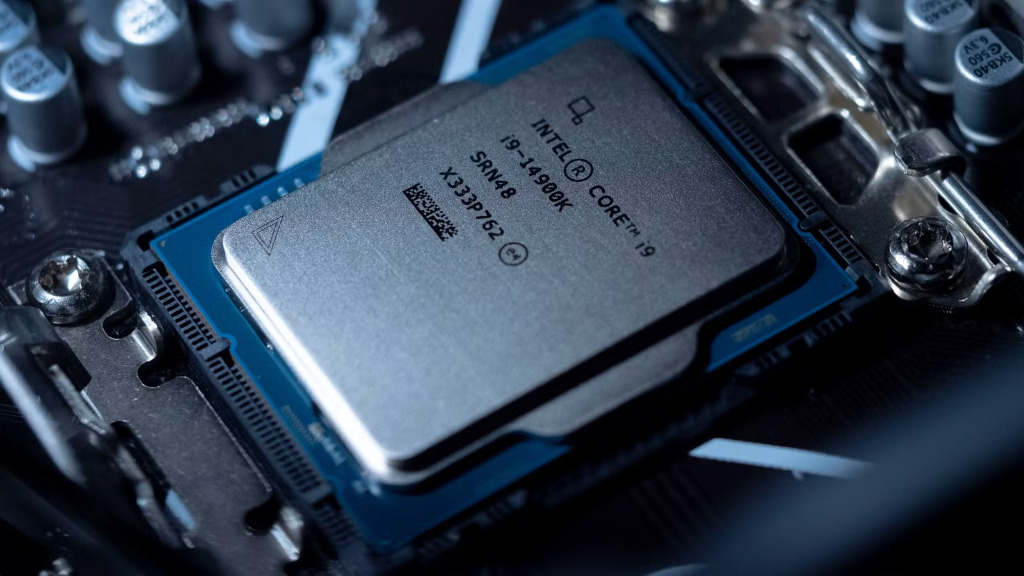
In the meantime, we got 14nm, 14nm+, 14nm++, and eventually 14nm+++++. By the end, they were adding plus signs like a desperate student padding a word count.
While Intel stalled, TSMC shipped 7nm in volume throughout 2018-2019. AMD built Ryzen 3000 (desktop) and EPYC Rome (server) on that process. They demolished Intel's 14nm chips on price, core counts, and power efficiency.
Intel's explanation evolved from "yield issues" to admitting fundamental design problems. EE Times reported Intel's 10nm used Self-Aligned Quad Patterning (SAQP) for backend metallization—a technique no other fab attempted at that node because of defect risks.
They also switched to cobalt interconnects, necessitating new inspection tools. Applied Materials' director of technical projects noted voids as small as 5nm needed detection—smaller than the cobalt line width itself.
Intel bet on unproven techniques, couldn't manufacture them reliably, and spent five years trying to fix unfixable yield problems while competitors shipped working products.
"The delay in 10 nanometer means that we're going to be a little bit disadvantaged on unit cost for a period of time." — George Davis, Intel CFO, 2020
"A little bit disadvantaged." Five years of lost leadership, billions in idle fab capacity, and giving AMD a free run at the market. "A little bit" is doing a lot of heavy lifting there.
The 7nm Disaster (2020-2023)
July 23, 2020: Intel announces 7nm is six months behind schedule due to "defect mode" causing yield degradation.
CEO Bob Swan claimed they'd "root-caused the issue" and saw "no fundamental roadblocks."
The Timeline:
- Original 7nm plan: 2021 consumer chips, 2022 server (Granite Rapids)
- After July 2020 delay: 2022 consumer, 2023 server
- Reality: 7nm didn't ship in volume until 2023-2024 under renamed "Intel 4" branding
While Intel struggled with 7nm yield, TSMC shipped:
- 7nm (2018-2021): AMD Ryzen 3000/5000, EPYC Rome/Milan, Apple A12-A14
- 5nm (2020-2022): AMD Ryzen 7000, Apple M1/M2, EPYC Genoa
- 3nm (2023-2024): Apple A17/M3
By the time Intel finally shipped rebranded "7nm" (Intel 4) in volume, TSMC customers were on nodes two generations ahead.
Tom's Hardware noted in 2020: "It broke a bit at 14nm... and then collapsed completely at 10nm. Meanwhile, TSMC has been able to maintain a two-year cadence. More modest improvements, but way more predictable."
Intel tried revolutionary jumps. TSMC iterated incrementally. When Intel's revolutionary approach failed, they had no fallback. Just years of delays.
The Market Share Bloodbath
Server CPUs (The Profit Center)
- 2019 Q1: Intel 97%, AMD 3%
- 2021 Q1: Intel ~90%, AMD ~10%
- 2023 Q3: Intel 72.2%, AMD 27.8%
- 2025 Q3: Intel 72.2%, AMD 27.8% (Units)
The unit share looks stable between 2023 and 2025. The revenue share does not.
AMD's server CPU revenue hit 41% in Q2 2025 (per Tom's Hardware), up 7.2% year-over-year. Intel's revenue share fell by matching amounts. AMD sells fewer total units but captures high-core-count, high-margin server SKUs. Intel keeps volume but loses the profit.
Bernstein Analysis shows Intel's server share at 61% by Q3 2025—down from 97% in early 2019. Systematic displacement.
Desktop CPUs
- 2017: Intel 90%+
- 2023: Intel 80%, AMD 20%
- Q3 2025: Intel 66.2%, AMD 33.6%
In 2016-2018, Intel outsold AMD 9:1. Now it's 2:1. AMD gained 9.2% desktop share year-over-year (Q3 2025). That's accelerating loss driven by Ryzen 9000 success in enthusiast segments.
Laptop CPUs (Intel's Supposed Fortress)
- 2015: Intel ~100%
- 2025: Intel ~60%, AMD ~22%, ARM ~18%
ARM's 18% is the executioner. Apple Silicon proved you could have performance without checking if your laptop battery had a pulse. Intel's response was to make chips that ran hotter—less "engineering challenge" and more "industrial thermal hazard."
The Layoffs Nobody Connects to Market Share Loss
Since end of 2022: 23,000 employees cut. Total potential: ~44,000 jobs eliminated across 2023-2025.
Revenue per employee:
- 2020: $700,000+
- 2023: $440,000
- 2024: $487,000
They're cutting people faster than they're losing revenue to make the productivity spreadsheet look green. It's like burning your furniture to keep the house warm. Sure, the temperature is up, but you have nowhere to sit.
Oregon: 3,000+ jobs eliminated (roughly 20% of the state workforce).
Folsom, CA: 1,000+ jobs eliminated since 2023.
Lip-Bu Tan (appointed CEO March 2025) targets $10 billion in cost reductions. Eliminating 23,000 people saves roughly $3.45 billion. Getting to $10B requires canceling fabs, selling divisions, and liquidating assets.
Selling off divisions to fund operations isn't restructuring. It's liquidation.
The CEO Carousel
Pat Gelsinger (2021 - 2024)
Hired to fix manufacturing. Promised parity with TSMC. The scorecard:
- 10nm delays continued
- 7nm (Intel 4) shipped late
- Stock fell 52% in 2024
- Q3 2024: $16.6 billion quarterly loss (biggest in history)
December 2025 interview: "We don't know how to engineer anymore."
He said this after running the company for four years. He blamed "bad decisions over 15 years." Helpful of him to notice the iceberg after steering the Titanic into it for 48 months straight.
Lip-Bu Tan (March 2025 - Present)
Former Cadence CEO. Resigned from Intel's board in 2024 because he "frustrated with the company's large workforce and risk-averse culture."
Translation: He thought Gelsinger wasn't firing people fast enough.
Compensation package: $68 million over five years. His introductory video warned of "tough decisions." "Tough decisions" usually means firing the people who make $60k so the guy making $13.6M a year can hit his stock targets.
The Foundry Disaster
Gelsinger's bet: transform Intel into a contract manufacturer. The problem: Trust.
If you're designing a chip and Intel can't manufacture their own CPUs on time, why risk your company's future on their fabs?
The Technical Cliff: Intel's 18A process uses backside power delivery (BSPD) with no front-side fallback. TSMC's competing N2 node supports both.
If Intel's 18A has yield problems—like 10nm did—customers have no backup plan. Their designs are BSPD-only. They can't port to FSPD or switch fabs easily. Intel went all-in on a technically aggressive approach with no safety net.
One SemiWiki commenter put it bluntly: "If they have any major problems like the ones that killed their 10nm process... there's no quick/easy way back for customers... and Intel Foundry is dead."
Current status: Qualcomm CEO says Intel is "not an option." TSMC, Nvidia, and Broadcom are reportedly considering a joint takeover of Intel's foundry operations. They aren't looking for a partnership. They're circling the carcass.
The Part Nobody Wants to Say
Intel's server share went from 97% to 61% in six years. Desktop from 90% to 66%.
This is systematic displacement. AMD executed; Intel panicked. TSMC iterated; Intel gambled.
The Tally:
- Process node leadership: Lost to TSMC (~2 generations)
- Server dominance: Lost to AMD (97% → 61%)
- Mobile monopoly: Lost to AMD + ARM (100% → 60%)
- Foundry credibility: Dead on arrival
- Financials: First annual net loss since 1986. Stock down 60% in 2024.
The empire didn't fall overnight. It eroded across a decade of arrogance. They spent 2016-2021 trying to fix 10nm. Then 2020-2023 trying to fix 7nm. Now they're betting the house on 18A while firing the architects.
It looks less like a turnaround plan and more like a controlled descent, hoping the ground isn't as hard as it looks.
Sources: Mercury Research (via Tom's Hardware, PC Gamer), Intel Earnings Reports (Q2-Q4 2024), TrendForce, TheLayoff.com, EE Times, SemiWiki tech analysis.