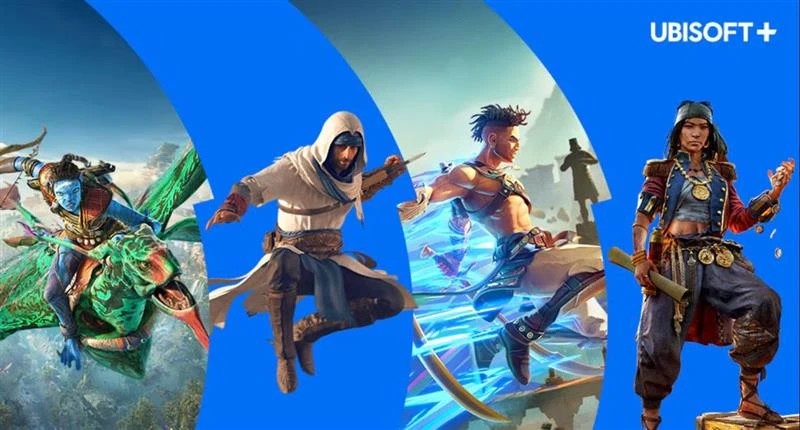
An Investigation
By Mercer | GameHazards
January 22, 2026
On January 22, 2026, at 10:00 AM CET, Ubisoft Entertainment SA opened trading on the Paris Bourse and immediately collapsed 33%. Trading was halted. When it resumed, the stock fell another 1.4%, settling at a 34.4% single-day loss—the worst in company history since going public in 1996.
Market capitalization at close: €616 million.
Peak valuation (2018): €11 billion.
Total value destroyed since 2018: €10.4 billion.
For context: Ubisoft just lost more value in one trading session than the entire market cap of CD Projekt Red (€4.2 billion), developer of Cyberpunk 2077 and The Witcher 3. In eight hours, Ubisoft erased what a successful AAA studio is worth.
One bad quarter doesn't erase €10.4 billion. One delayed game doesn't trigger a 34% crash. What does? A CEO who spent four decades building a company, protected executives convicted of criminal sexual harassment, gutted 2,900+ jobs while his son got promoted to co-chief of a Tencent subsidiary, and presided over systematic shareholder value destruction while blaming workers for management's failures.
If you've been reading my coverage—the covenant breach investigation, the Halifax closure analysis, the full Ubisoft decline report from December—you knew this was coming. I just didn't expect them to speed-run the collapse this efficiently.
Yesterday's announcement—six games canceled, seven delayed, €1 billion operating loss projected, two studios closed—was the match. But the gasoline was poured over five years of compounding failures that leadership refused to address until the banks forced their hand.
Let me show you exactly how this happened.
And yes—I spent hours documenting the covenant breach, more hours on the Halifax closure, even more on the December decline report. Now this. Four major investigations on the same company in two months. At this point, I'm beginning to wonder if Ubisoft pays me by the word, because chronicling their collapse has become a full-time job. It's overkill. But someone has to connect the dots they're hoping you won't notice.
PART I: What Actually Triggered the Crash (January 21, 2026)
The announcement came late Wednesday, January 21, after European markets closed. Ubisoft released a 54-page document titled "Major Organizational, Operational and Portfolio Reset."
What they said (Yves Guillemot, CEO):
"Today's market environment requires that the Group step-changes how it is organized and operates with a view to delivering the very best open-world adventures... These measures mark a decisive turning point for Ubisoft and reflect our determination to confront challenges head-on to reshape the Group for the long term."
Translation: "We've been losing money for years, our games keep failing, and we're finally admitting we don't know how to fix it. So we're canceling everything that won't generate immediate revenue and hoping a corporate restructure will somehow make us creative again."
"Decisive turning point." "Confront challenges head-on." "Reshape the Group for the long term." These are the words of a CEO whose company just lost a third of its value in one morning. The market didn't buy the spin. Neither should you.
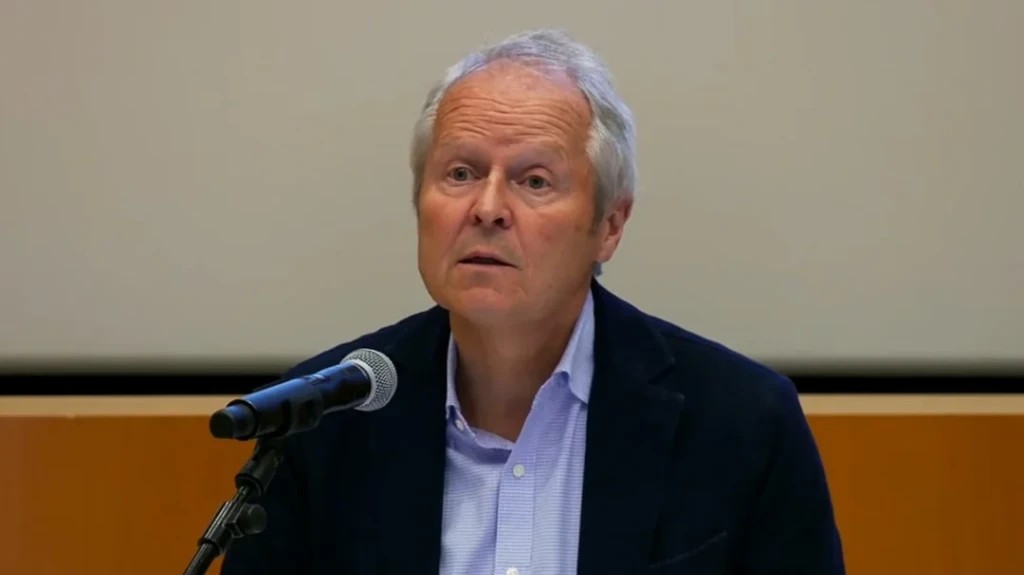
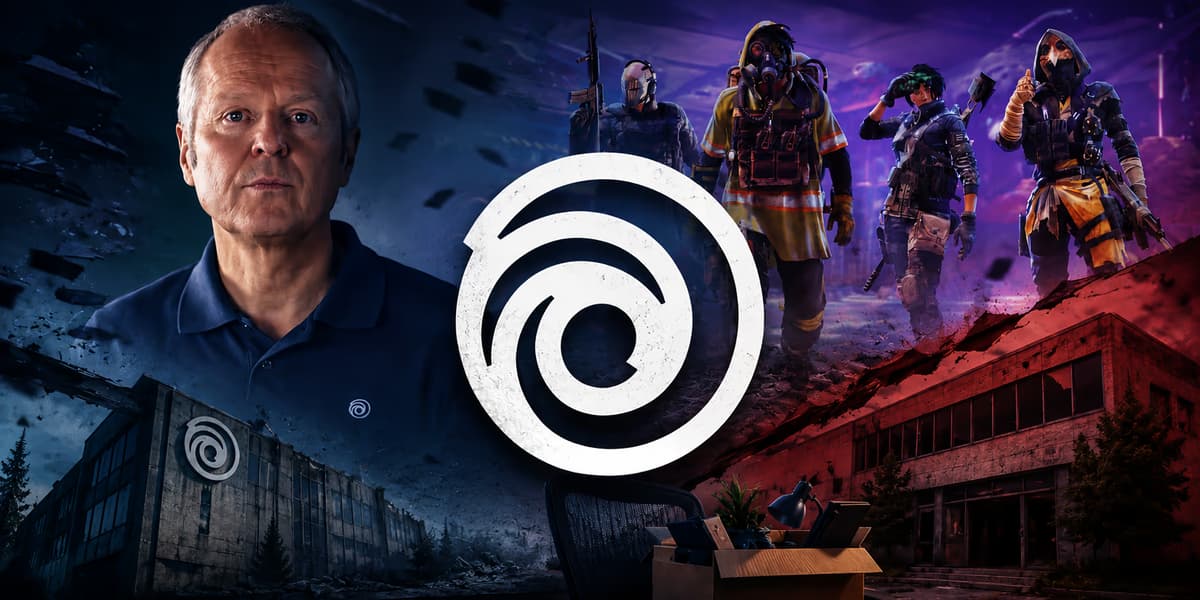
Yves Guillemot, CEO of Ubisoft. Thirty-seven years in the chair. Three convicted executives. €10.4 billion destroyed. Still employed.
The Numbers Behind the "Reset"
Operating loss (FY2026): €1 billion
Includes €650 million writedown from canceled/delayed games
Net bookings forecast (FY2026): €1.5 billion
Down from €1.85 billion guidance
Down from €2.32 billion (FY2024-25)
Projected negative free cash flow: €400-500 million
Net debt (end of FY2026): €150-250 million
Cash reserves: €1.25-1.35 billion
Compare those cash reserves (€1.25B) to the operating loss (€1B) and you see the problem: Ubisoft is burning through nearly its entire cash cushion in a single fiscal year. If FY2027 looks anything like FY2026, they're insolvent.
I wrote about the covenant breach a few hours before this. The math hasn't changed. It's just gotten worse.
Six Games Canceled
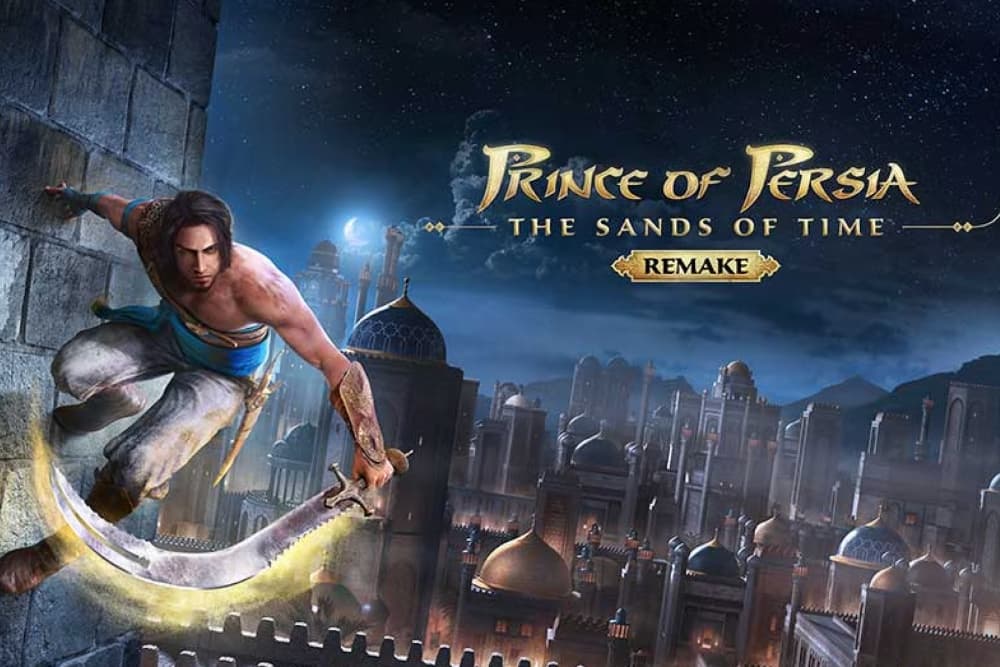
1. Prince of Persia: The Sands of Time Remake (publicly named)
- Announced: 2020
- Handed to Ubisoft Pune
- Restarted at Montreal: 2022
- Restarted AGAIN: 2023
- Delayed to "early 2026"
- Canceled: January 21, 2026
- Five years. Three studios. Two complete restarts. Estimated cost: $60-80 million. Never shipped.
2-4. Three unannounced new IPs
Early development, concepting/prototyping stage
5. One unannounced mobile game
6. One additional unannounced project
Seven Games Delayed to 2027
Ubisoft refused to name them, but according to Tom Henderson (Insider Gaming):
Assassin's Creed IV: Black Flag Remake was scheduled to go gold first week of February, launch March 19 as digital-only. Now delayed to 2027.
The game was weeks from shipping. Ubisoft pulled it back because the restructure created five "Creative Houses" and nobody could figure out which House owned Black Flag until 2027.
Organizational paralysis dressed up as strategic portfolio refinement.
Two Studios Closed
Ubisoft Stockholm: Contributors to Avatar: Frontiers of Pandora
Ubisoft Halifax: 71 employees, closed January 7—twenty days after unionizing
I covered the Halifax closure in detail. They still haven't provided the timeline documentation proving the decision predated unionization. They never will. They can't.
Additional Restructuring
Massive Entertainment: 55 layoffs (announced January 13)
Ubisoft Abu Dhabi: Restructuring, numbers undisclosed
RedLynx (Helsinki): Restructuring, numbers undisclosed
Return-to-office mandate: Five days per week, company-wide, effective immediately
The New "Creative Houses" Structure
Ubisoft is splitting into five decentralized units:
- Vantage Studios (CH1): Assassin's Creed, Far Cry, Rainbow Six (26% owned by Tencent as of March 2025)
- CH2: Competitive shooters—The Division, Ghost Recon, Splinter Cell
- CH3: Live services—For Honor, The Crew, Riders Republic, Skull & Bones
- CH4: Immersive fantasy—Anno, Might & Magic, Rayman, Prince of Persia, Beyond Good & Evil
- CH5: Casual/family—Just Dance, mobile games, Hasbro licenses
Each House gets "full financial responsibility and dedicated leadership teams."
Read between the lines: When the next Far Cry fails, Ubisoft can blame CH1 leadership instead of CEO Yves Guillemot, who will remain CEO while his failures get distributed across five scapegoat divisions.
PART II: The Cost-Cutting Timeline (Or: How We Got Here)
This wasn't sudden. Ubisoft has been slashing costs for four years. The pace just accelerated when the banks noticed.
FY2022-23 baseline fixed costs: €1.75 billion
Phase 1 (completed): €100 million reduction target
Achieved March 2026, one year ahead of schedule (per January 21 announcement)
Phase 2 (announced January 21): Additional €200 million reduction over next two years
Total fixed cost reduction (FY2022-23 to March 2028): €500 million
Target fixed costs (March 2028): €1.25 billion
Down 28.6% from FY2022-23
How Do You Cut €500 Million?
Employee headcount reduction:
- 2022-2024: 1,700 layoffs
- December 2024: 277 (XDefiant shutdown)
- January 2025: 185 (Leamington closure)
- September 2025: 700
- January 2026: 71 (Halifax) + 55 (Massive) + undisclosed (Abu Dhabi, RedLynx)
- Total documented: 2,900+
Headcount:
- September 2024: 18,597
- September 2025: 17,097
- January 2026 (estimated): ~16,900
Assuming average loaded cost per employee of €65,000 (factoring global wage differences), eliminating 2,900 positions saves roughly €188 million annually.
That's barely a third of the €500 million target.
The remaining €312 million? Studio closures. Project cancellations. Cutting marketing spend. Axing R&D. The stuff that makes games people want to buy.
Here is what bothers me: You cannot cost-cut your way to growth. Ubisoft is cannibalizing the creative capacity that generates revenue while keeping the executive structure that caused the failures. When Prince of Persia burned €60-80 million over five years with two restarts, someone made those decisions. Those people are still employed. The developers who could've made it work? Many got fired via Twitter announcement.
The lesson Ubisoft taught its own workforce: fail upward if you're an executive, fail out the door if you're not.
PART III: The Covenant Breach Nobody's Talking About
I broke this story in my previous investigation. Here's the summary for those who missed it: January's announcement wasn't the first crisis. It was the second shoe dropping after a covenant breach in September 2025 that Ubisoft buried on page 19 of their November earnings.
Covenant Compliance (September 30, 2025)
Before IFRS Restatement:
- Net Debt to EBITDA: 1.30
- Covenant limit: 1.50
- Status: Compliant ✓
After IFRS Restatement:
- Net Debt to EBITDA: 1.81
- Covenant limit: 1.50
- Status: BREACH ✗
They missed the covenant by 20%. Not close. Not "approaching limits." Default trigger territory.
Why the restatement?
July 2025: Ubisoft hired new auditors.
New auditors immediately flagged revenue recognition problems. Two B2B partnership deals where Ubisoft booked upfront commitments needed to be recognized over time instead.
The damage:
- EBITDA revision: €910.4M → €651.7M (€258.7M drop)
- Equity revision: €1.738B → €1.654B (€84M drop)
- Total erased from balance sheet: €342.7M
€342.7 million is roughly what it costs to develop three AAA games. Ubisoft's books were so poorly maintained that when competent auditors showed up, the equivalent of three major projects simply vanished from the ledger. Imagine telling shareholders: "Good news: we found the money. Bad news: it never existed."
What happens when you breach covenants?
Standard bank remedies:
- Immediate repayment in full
- Penalty interest (200-300 basis points over base)
- Asset seizure rights activate
- Forced asset sales to cover exposure
Ubisoft avoided this because Tencent's €1.16B was closing. Bloomberg confirmed November 21: "Ubisoft will use money from Tencent investment to pay off debt after breaching loan agreement."
€286 million of that went immediately to repay the Term Loan—due December 2025.
The Tencent money didn't save Ubisoft from angry lenders. It saved them from insolvency.
PART IV: The Strike That Happened This Morning
While Ubisoft's stock collapsed, French union Solidaires Informatique called a half-day strike—this morning, January 22.
Their demands:
- End the cost-cutting plan
- Maintain and extend remote work options
- Provide "decent" pay raises (not 2-3% below inflation)
Solidaires Informatique statement:
"This is an initial answer to the absurdity of management's decisions. Other strikes are currently being discussed. It is out of the question to let a boss run wild and destroy our working conditions. Perhaps we need to remind [Yves Guillemot] that it is his employees who make the games."
That last line—workers reminding a CEO that they make the games—while €10.4 billion evaporates on a trading floor. Restructuring announcements don't ship products. Employees do. The ones being fired via Twitter.
The strike targeted Ubisoft Paris. Participation numbers haven't been disclosed, but this is the same union that organized 700+ workers for strikes in October 2024 (RTO mandate protests) and has filed legal action demanding Guillemot be tried for complicity in systemic sexual harassment.
For context: Ubisoft has been fighting unions for years.
- January 2023: Guillemot email telling employees "the ball is in your court" to fix financial problems triggered first major strike
- October 2024: 700+ workers struck over RTO mandate
- December 2025: Halifax workers unionized (74% approval)
- January 2026: Halifax closed 20 days later
The pattern is unmistakable: Workers organize. Ubisoft retaliates or ignores. Repeat.
Today's strike is the institutional response to yesterday's announcement. Unions see what's coming: more layoffs, worse conditions, AI replacing creative roles, and leadership that blames everyone except the people making decisions.
PART V: The AI Admission Buried in Corporate Speak
From yesterday's announcement:
"The new operating model will be supported by accelerated investments into player-facing generative AI."
Not internal tools. Not testing automation. Player-facing.
That means AI-generated content in the games you buy.
November 2025, Yves Guillemot to investors:
"We are making great strides in applying Gen AI to high-value use cases that bring tangible benefits to our players and teams. It's as big as a revolution for our industry as the shift to 3D. Teams in all our studios embracing this new technology."
The shift to 3D created texture artists, 3D modelers, and animators. The timeline on this "revolution"? Layoffs announced the same month.
Let me connect the dots:
- November: Guillemot celebrates AI adoption "in all studios"
- December-January: 1,500+ employees laid off in 12 months
- January 13: 55 positions eliminated at Massive Entertainment
- January 21: "Accelerated investments" in player-facing AI announced
- January 22: Stock crashes 33%
Guillemot compared AI to the 2D-to-3D transition. That transition created jobs—studios hired 3D modelers, texture artists, animators. AI is doing the opposite. It's consolidating work so fewer people can produce more output.
The uncomfortable reality: The "high-value use cases" Guillemot celebrates include "we need fewer concept artists when we have Midjourney" and "programmers assisted by Copilot can handle more workload per person." Ubisoft isn't investing in AI to make better games. They're investing in AI to replace the people who make games. When you're cutting €500 million and laying off thousands while simultaneously touting "accelerated AI investments," the math isn't subtle.
Notably: AI can't unionize, strike, or file lawsuits. The timing of this investment is worth considering.
PART VI: Prince of Persia—The €80 Million Controlled Demolition
Five years. Three studios. Two complete restarts. Never shipped.
Timeline:
- September 2020: Announced at Ubisoft Forward, developed by Ubisoft Pune and Mumbai
- 2022: Restarted, moved to Ubisoft Montreal
- 2023: Restarted AGAIN after internal reviews showed quality concerns
- May 2024: Delayed to 2025
- 2025: Delayed to "early 2026"
- January 21, 2026: Canceled
Official reason (from announcement):
"We didn't want to release something that fell short of what The Sands of Time represents."
If quality was the concern, why restart it twice before canceling? Why not kill it in 2022 after the first restart failed? Why delay it four times if it was fundamentally broken?
Industry standard remake budget: $50-80 million for AAA titles.
Five years across three studios with two complete restarts? Conservatively, €60-80 million spent. Possibly more if you factor in marketing prep, voice recording, motion capture sessions for content that never shipped.
For context: In the same five-year period:
- Larian Studios made Baldur's Gate 3 (smaller team, massive success)
- CD Projekt Red rebuilt Cyberpunk 2077 from disaster to acclaim
- Hello Games turned No Man's Sky into a redemption story
Ubisoft had five years and couldn't ship a remake of a game that already existed. The original Prince of Persia: Sands of Time was made in 2003 by a smaller team with 2003 technology. Twenty-three years later, with bigger budgets and better tools, Ubisoft couldn't replicate their own homework.
The difference? Those studios had leadership that could make decisions and stick with them. Ubisoft had a CEO who watched €80 million burn, restarted the project twice, and only pulled the plug when the banks came calling.
€80 million spent. Zero games shipped. And the team that worked on it found out via social media that their five years of work was over.
PART VII: Assassin's Creed Black Flag—Delayed Weeks Before Gold
According to Tom Henderson (Insider Gaming), Assassin's Creed IV: Black Flag Remake was scheduled to:
- Go gold: First week of February 2026
- Launch: March 19, 2026 (digital-only release)
The game was weeks from shipping. Done. Ready to generate revenue.
Ubisoft delayed it to 2027—potentially a full year.
Henderson's speculation: "In hindsight, it could have been full of bugs, which is why they have delayed it."
If bugs were the issue, explain why it was going gold in three weeks. Gold means code-complete, ready for certification.
The more likely explanation: The five Creative Houses restructure created organizational chaos. Nobody could decide which House owned Black Flag (is it a shooter? open-world adventure? live service potential?). Rather than resolve the question quickly, they delayed the revenue-generating product by a year.
Leadership paralysis costing shareholders millions in delayed revenue while employees wonder if their jobs exist tomorrow.
PART VIII: Yves Guillemot's Compensation (And What It Buys)
Tracking Guillemot's exact compensation is difficult—Ubisoft's filings are inconsistent, he's taken voluntary cuts during crisis years, and stock awards complicate total comp figures.
What's documented:
- 2021: €1.03 million (~$1.08M USD)
- 2022: €624,824 (~$657K USD) (30% voluntary cut after missing targets)
- 2023: €624,824 (~$657K USD) (voluntary cut extended)
- 2024: First raise since 2019 (amount undisclosed, described as "tiny" by Game File)
- 2025-2026: Not publicly disclosed yet
Even at the reduced €625K base, Guillemot's compensation equals roughly 9-10 median Ubisoft employee salaries.
Context check:
Halifax closure: 71 employees
Massive layoffs: 55 employees
Total: 126 positions eliminated in January 2026
At average loaded cost of €65K per employee, that's €8.2 million in annual savings—roughly 13 years of Guillemot's base salary.
The math nobody wants to discuss:
Yves Guillemot has been CEO since 1988. Thirty-seven years. In that time:
- Three top executives convicted of criminal sexual harassment (July 2025)
- 2,900+ employees laid off (2022-present)
- Stock down 85% from 2021 peak
- €10.4 billion in shareholder value destroyed (2018-2026)
- Covenant breach requiring emergency Tencent intervention
- Prince of Persia: €80 million burned over five years, never shipped
- XDefiant: Hundreds of millions spent, shut down after months
Guillemot never testified at the harassment trial. He structured the Tencent deal to protect family voting control (20%+) while diluting minority shareholders. His son Charlie became co-CEO of Vantage Studios despite zero public track record beyond his surname.
Workers organizing for job security get studios closed. Executives enabling harassment get suspended sentences. The CEO overseeing it all gets year 38 in the chair.

Tommy François, former VP of Editorial. Convicted July 2025. Three-year suspended sentence. Guillemot never testified.
The outcomes: Harassers received suspended sentences. Workers received termination notices.
PART IX: The Financial Death Spiral (In Numbers)
Market Capitalization Collapse
- January 2021: $12.17 billion (€11.6B)
- January 2024: $3.14 billion (€2.99B) | -74%
- January 2025: $1.78 billion (€1.70B) | -85% from peak
- January 21, 2026 (close): ~€950 million
- January 22, 2026 (intraday low): €616 million | -94% from peak
Total value destroyed (2021-2026): €10.4 billion
Debt vs. Market Cap (November 2025)
- Net debt: €1.15 billion
- Market cap (pre-crash): €950 million
Ubisoft's debt exceeded its market value before today's crash. After? The company is worth less than two-thirds of what it owes.
Revenue Collapse
Net Bookings:
- FY2023-24: €2.32 billion
- FY2024-25: €1.85 billion | -20%
- FY2025-26 (forecast): €1.5 billion | -35% from FY23-24
Revenue down 35% in three years while fixed costs only declining 28%. That gap is where insolvency lives.
The Dependency Problem
96% of FY2024-25 bookings came from catalog titles—old games.
- Assassin's Creed back catalog
- Rainbow Six Siege (10 years old, recently hacked)
- The Division 2
- Far Cry 5
New releases? Star Wars Outlaws underperformed so badly Ubisoft slashed revenue forecasts by €350 million. Assassin's Creed Shadows had strong Day One sales in March 2025 but couldn't offset broader losses.
Ubisoft is a company dependent on games released 5-10 years ago because everything new either fails or gets canceled.
Rainbow Six Siege—their live service crown jewel—is a decade old, recently suffered a major security breach, and hackers gave away premium currency worth millions. That's the flagship. That's what's keeping the lights on while leadership burns €80 million on remakes that never ship.
PART X: What Guillemot Said vs. What He Did
January 2023, email to staff after $538M operating loss:
"The ball is in your court to deliver the line-up on time and at the expected quality level."
Translation: I've been CEO for 35 years, but these failures are your fault.
What happened next: 700+ Ubisoft Paris employees struck for four hours demanding pay increases and four-day work weeks. Union called it "catastrophic" management shifting blame onto workers.
November 2025, to investors: Guillemot celebrated AI adoption across "all studios."
One month later: 126 employees laid off in January alone, with more coming February 12 (numbers undisclosed).
January 21, 2026, official statement:
"These measures mark a decisive turning point for Ubisoft and reflect our determination to confront challenges head-on."
What they actually did: Canceled six games via press release. Told employees about layoffs through Twitter. Refused to provide Halifax closure timeline documentation. Announced AI investments while gutting creative headcount.
Note: Charlie Guillemot was promoted to co-CEO of Vantage Studios during this period.
PART XI: The Tencent Deal—Bailout Disguised as Investment
March 27, 2025: Ubisoft announced Tencent would invest €1.16 billion for 26.32% stake in Vantage Studios—a subsidiary housing Assassin's Creed, Far Cry, and Rainbow Six.
Deal structure:
- Vantage Studios valued at €4 billion pre-money
- Tencent gets 26.32% for €1.16B
- Guillemot family retains 20%+ voting rights in Vantage
- Charlie Guillemot (Yves' son) named co-CEO of Vantage
- Structure avoids triggering French mandatory buyout laws (30% threshold)
Where the money went (per November 21, 2025 earnings):
- €286 million: Immediate repayment of Term Loan and Schuldschein loans (the debts where they breached covenants)
- Remainder: "Selected investment opportunities" and "ongoing reorganization efforts" (severance packages, restructuring costs)
Minority shareholder response:
AJ Investments filed for Extraordinary General Meeting demanding:
- Restructure as direct asset sale worth ≥€4 billion
- Distribute €23/share (~$24 USD) extraordinary dividend (€3B total)
Their statement:
"This signals a clear verdict from investors—the proposed deal is deeply flawed, structured to bypass mandatory public offer rules, and designed to entrench control by the Guillemot family."
The deal bypassed French mandatory buyout laws while protecting Guillemot family control. Regular shareholders got diluted when stock crashed 24% on announcement day. Anyone who bought before 2024 has lost ~85%.
Call it what it is: Tencent isn't investing in Ubisoft's future. They're acquiring Assassin's Creed, Far Cry, and Rainbow Six at bankruptcy-adjacent prices while the Guillemot family uses other people's money to cover management failures. The structure ensures Yves remains CEO, Charlie gets promoted despite zero qualifying experience, and minority shareholders subsidize the family's incompetence through dilution. Exit strategy masquerading as investment.
PART XII: The Three Timelines Nobody Connected
Timeline 1: The Covenant Breach
- July 2025: New auditors hired
- September 30, 2025: Covenant breach (1.81 vs 1.50 limit)
- November 13, 2025: Trading halted, earnings delayed
- November 21, 2025: Earnings released, breach disclosed on page 19
- December 2025: €286M debt repayment due
Timeline 2: The Tencent Bailout
- March 27, 2025: Tencent deal announced (€1.16B for 26% of Vantage)
- November 21, 2025: Confirmed €286M used for immediate debt repayment
- January 21, 2026: Remaining funds allocated to "reorganization efforts"
Timeline 3: The Cost-Cutting Acceleration
- December 2024: XDefiant shutdown, 277 laid off
- January 7, 2026: Halifax closed (71 employees)
- January 13, 2026: Massive layoffs (55 employees)
- January 21, 2026: Six games canceled, seven delayed, €1B loss projected, February layoffs pre-announced
The connection everyone missed:
Ubisoft breached covenants in September, needed emergency cash to avoid default, structured a Tencent bailout in March that protected family control, used that money to pay debts in November, then spent December-January conducting the "thorough portfolio review" that justified canceling everything not generating immediate revenue.
January 21 wasn't a strategic reset. It was panic cost-cutting to avoid violating loan agreements again while cash reserves dwindle.
The restructure, the cancellations, the layoffs—all of it flows from the covenant breach Ubisoft buried on page 19 two months ago.
PART XIII: What Actually Happens Next
Best case:
Cost cuts stabilize finances through FY2027. Delayed games launch successfully. Tencent remains passive investor. Hundreds lose jobs but core franchises survive as Tencent-adjacent subsidiary.
Realistic case:
FY2027 projections miss again. New releases underperform. Tencent gradually increases stake to majority. Guillemot exits with golden parachute. More studios close. IP sold piecemeal: Assassin's Creed to Tencent, Far Cry to Microsoft, Rainbow Six to EA.
Worst case:
FY2027 revenue collapses. Lenders lose patience. Tencent renegotiates at fire-sale valuation or walks entirely. Bankruptcy filing. Asset liquidation. Assassin's Creed franchise sold, Far Cry sold, Rainbow Six sold, everything else shuttered.
What's likely:
Tencent will use the current 25% stake as foundation for gradual acquisition. Ubisoft's deteriorating position—debt exceeding market cap, CCC credit rating, ongoing layoffs—suggests limited alternatives.
Whether Guillemot negotiates an exit or attempts to maintain control under Tencent ownership remains unclear. The independent French publisher that released Prince of Persia, Rayman, and Assassin's Creed exists only in press releases now.
Here's the actual track record:
- Protected convicted sexual harassers
- Structured deals benefiting his family over shareholders
- Presided over 85% stock collapse
- Laid off 2,900+ employees
- Told workers financial failures were their fault
- Promoted his son to co-CEO of the subsidiary holding the company's most valuable assets
- Remained CEO for 37 years through all of it
BOTTOM LINE: Five Uncomfortable Truths
1. The covenant breach was the inflection point.
September 30, 2025: Ubisoft breached debt covenants because new auditors discovered €342.7 million in accounting errors. That breach required emergency intervention (Tencent bailout) and triggered the cost-cutting that led to today's crash. Everything since November has been damage control.
2. January 21 wasn't strategy—it was desperation.
Six canceled games. Seven delays. €1 billion loss. €650 million writedown. These aren't the decisions of confident leadership executing a vision. These are the decisions of executives cutting everything possible to satisfy lender requirements while praying delayed games generate enough revenue in 2027 to avoid another covenant breach.
3. The AI investment timing is damning.
Guillemot celebrates "accelerated AI investments" in the same announcement where he's laying off hundreds. Either he genuinely believes AI will make better games with fewer people (delusional), or he's using AI as cover for cost-cutting while destroying the creative capacity that differentiates Ubisoft from competitors (probably this).
4. Workers pay. Executives profit. Shareholders lose.
2,900+ employees laid off. Yves remains CEO. Charlie becomes co-chief despite zero qualification. Tencent gets 26% of valuable IP. Minority shareholders? Diluted and locked in while the company burns cash. The people who caused the failures are protected. The people who make the games are expendable.
5. This was preventable.
Every warning sign was visible:
- 2020 harassment scandal revealed toxic culture
- 2023 debt approaching market cap
- 2024 multiple game underperformances
- 2025 covenant breach, layoffs, union battles
Leadership's response: protect family control, blame workers, cut costs, hope delayed games save them.
They chose this outcome through five years of decisions that prioritized executive survival over sustainable business.
SOURCES
Financial filings:
- Ubisoft H1 FY2025-26 Earnings (November 21, 2025)
- Ubisoft FY2024-25 Q4 Earnings (May 2025)
- Ubisoft "Major Reset" announcement (January 21, 2026)
Market data:
- Bloomberg (November 21, 2025): Covenant breach, Tencent debt repayment
- Reuters (November 21, 2025): Auditor restatement, analyst quotes
- Yahoo Finance, MarketScreener: Stock price data
- AFP, RTE, Digital Journal: January 22 crash coverage
Reporting:
- Tom Henderson/Insider Gaming: Black Flag delay, internal communication failures
- Game File: Guillemot compensation details, AI investments
- PC Gamer, GamingBolt, VGC: Layoff announcements, studio closures
- Fortune Europe, Axios: Strike coverage, union demands
- That Park Place, The Escapist, Cryptopolitan: Tencent deal analysis
Union sources:
- Solidaires Informatique press releases
- STJV (Syndicat des Travailleurs du Jeu Vidéo) statements
- CWA Canada certifications
Previous GameHazards investigations:
- "Inside Ubisoft's Decline" (December 29, 2025)
- "The Covenant Breach Ubisoft Didn't Want You to Notice" (January 22, 2026)
- "Halifax Studio Closure 20 Days After Unionization" (January 7, 2026)
- "Massive Entertainment Layoffs" (January 13, 2026)
All quotes verified through original sources or multiple independent reports. Currency conversions use €1 = $1.
If you work at Ubisoft and have documentation contradicting any of this—especially Halifax closure timeline or internal communication about these decisions—use the contact button in the site footer. Will update with verified corrections.