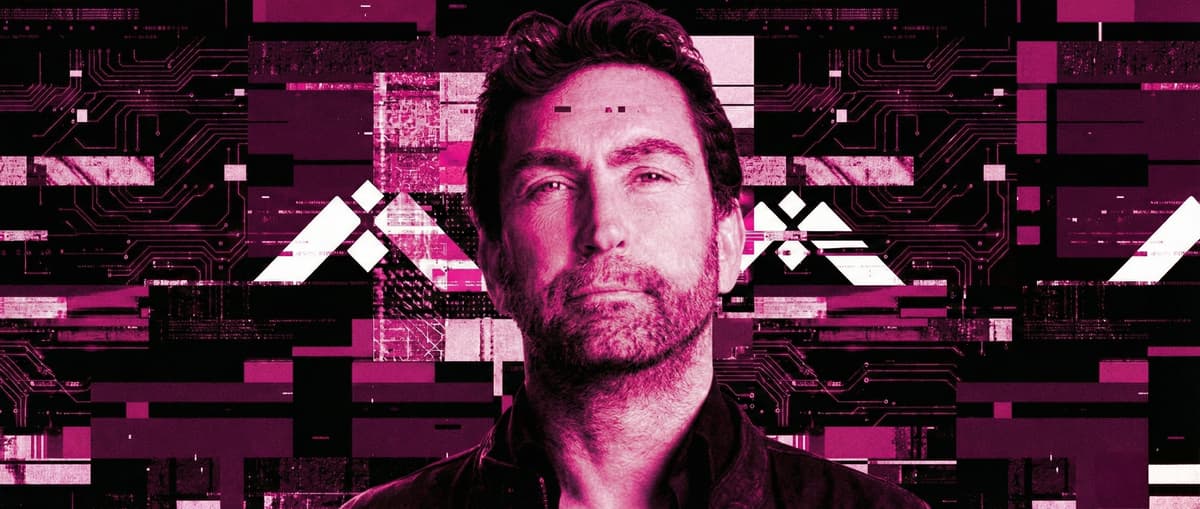

On June 10, 2025, MindsEye launched to catastrophic reviews. Within a week, it held the lowest Metacritic score of any game released that year. Within a month, player counts dropped below 20. By July, nearly 300 employees received redundancy notices. By October, 93 former staff signed an open letter condemning studio leadership, and a labor union sued Build a Rocket Boy for mishandling layoffs.
This is the story of how one of gaming's most respected producers burned through a quarter-billion dollars, blamed everyone but himself, and destroyed the credibility he spent 15 years building—told through employee testimony, internal documents, and industry reporting.
The Promise: From GTA to "Everywhere"
Leslie Benzies' pedigree was impeccable.
As president of Rockstar North from 1999-2014, he oversaw Grand Theft Auto's evolution from cult hit to cultural phenomenon. He was lead producer on GTA III, Vice City, San Andreas, IV, and V—games that collectively generated billions in revenue and redefined open-world design.
When Benzies left Rockstar in 2016 (amid a messy legal dispute), the industry paid attention. What would the man behind GTA create next?
The answer was Build a Rocket Boy (BARB), founded in Edinburgh in 2018. The studio's vision: Everywhere, a multiplayer open-world platform where players could create their own experiences using powerful game-creation tools.
Think Roblox meets GTA, with AAA production values.
MindsEye was supposed to be the proof-of-concept—a premium, story-driven game built entirely within the Everywhere platform, demonstrating what the tools could do.
By 2023, the pitch evolved: MindsEye would be an episodic cinematic adventure spanning different time periods, exploring themes of AI, technology, greed, and corruption. Each episode would last roughly 20 hours.
Investment poured in. According to multiple reports, BARB raised over £233 million ($270 million USD) from investors betting on Benzies' track record.
At its peak, the studio employed over 400 staff across offices in Edinburgh, Budapest, and Montpellier—more people than worked on GTA V at any given time. Benzies had everything he needed except, apparently, the ability to use it.
The Reality: "Leslie Never Decided What Game He Wanted to Make"
Then it all fell apart.
According to testimony from seven current and former employees interviewed by Decode and the BBC, MindsEye's development was chaotic from the start.
Jamie, a former employee who left in 2022, told the BBC:
"Leslie [Benzies] never decided what game he wanted to make. There was no coherent direction."
The "Leslie Ticket" Problem
Internal workflows revolved around what staff called "Leslie tickets," "Leslie bugs," or simply "Leslies"—directives from Benzies that took absolute priority, no matter how minor.
Ben Newbon, former lead data analyst:
"It didn't matter what else you were doing, what else was being worked on. The Leslie ticket had to be taken care of."
These weren't just bug fixes. According to employee accounts, Leslies included:
- Removing entire missions from the game
- Redesigning major features based on Benzies' personal playthroughs
- Overriding planned work to implement minor aesthetic changes
The tower defense side mission became a focal point of frustration. Multiple developers reportedly objected to its design and fit within the game, but it was pushed through anyway.
Former staff described constant "knee-jerk" decisions from upstairs, with feedback from the development team "ignored and just never actioned," according to Newbon.
Think about that: a system where one man's personal preferences override 400 experienced developers. At Rockstar, the Houser brothers, Dan Houser, and other senior leads could push back on Benzies. At Build a Rocket Boy, apparently no one could. The result: a tower defense minigame no one wanted in a game no one could figure out the point of.
The Crunch: Unpaid Overtime and Collapsing Morale
Between February and May 2025—the final months before launch—most staff worked extensive unpaid overtime to fix problems Benzies' indecision created.
The studio promised time in lieu after release, but that never materialized.
An anonymous employee told the BBC:
"And it does mess with you. You really do start to see the morale go down, the little arguments starting to happen."
According to Decode's investigation (based on interviews with seven employees and internal documents), the development process was characterized by:
- Too much ambition
- Excessive control from leadership
- False promises about scope and timeline
- No clear vision until "the very last minute"
One developer summarized it bluntly:
"It felt like we didn't really know what kind of game we were making until the very last minute."
The Launch: Broken, Buggy, and "Heartbroken"
MindsEye released June 10, 2025.
Within hours, reports flooded in:
- Pedestrians walking on air
- Severe graphical glitches affecting character faces
- Game-breaking bugs
- Memory leaks affecting roughly 1 in 10 players
- Performance issues across all platforms
Twitch streamer CohhCarnage was instructed by the studio to cancel his planned launch-day stream due to the backlash.
PlayStation began issuing refunds within days—a move reminiscent of Cyberpunk 2077's 2020 disaster.
On June 13, Build a Rocket Boy issued a statement:
"We're heartbroken... We are prioritizing optimizing the game's performance and stability."
Critical reception was devastating:
- Metacritic: 28/100 (lowest score of any 2025 game, based on 32 critic reviews)
- User score: 2.5/10
- Metro GameCentral: "One of the worst video games of the modern era, that clearly isn't finished"
The Sales: A Quarter-Billion Dollar Flop
Internal projections expected 500,000 PC sales in the first month.
According to Decode's sources with access to internal sales data, MindsEye sold approximately 160,000 units total across all platforms.
At an estimated $50-60 price point, that's roughly $8-10 million in gross revenue.
Against £233 million in investment—a loss ratio so catastrophic it makes Concord's reported $400M failure look almost reasonable by comparison.
Leslie Benzies spent more money making MindsEye than Rockstar spent on Grand Theft Auto V's entire development budget (estimated £170M). GTA V has generated over $8 billion. MindsEye generated maybe $10 million and fewer than 20 concurrent players within a month.
Player counts collapsed. Within a month, concurrent players on Steam dropped below 20.
The Blame: "Saboteurs" and Conspiracies
Rather than accepting responsibility, leadership pointed fingers.
May 27, 2025 (two weeks before launch): Co-CEO Mark Gerhard claimed in a Discord Q&A that negative pre-release coverage was part of a "paid campaign by a third-party" to trash the game and studio.
July 2025 (one month after launch): During an all-hands staff video call, Leslie Benzies told employees:
- The negative reception was "uncalled for"
- "Internal and external forces" were sabotaging the project
- He would launch an investigation to "root out saboteurs" within the company
"I find it disgusting that anyone could sit amongst us, behave like this and continue to work here"
One week later, layoff notices began.
The BBC asked Build a Rocket Boy for evidence or clarification on the sabotage claims. The studio provided neither—because there wasn't any.
The "saboteurs" theory is what happens when ego can't accept failure. It's easier to blame phantom conspirators than admit you spent £233 million building a game with no coherent vision, ignored everyone who tried to help, and shipped something so broken PlayStation started issuing refunds within days.
My opinion: The sabotage claims aren't just absurd—they're insulting. When your game launches this broken after eight years, £233 million, and 400+ employees, that's your failure as a leader. Benzies micro-managed every detail via "Leslie tickets," ignored developer feedback, forced unpaid crunch, and still shipped a disaster. Then, instead of owning it, he blamed shadowy "saboteurs" and threatened to "root out" disloyalists among staff who'd just worked months of unpaid overtime for him. That's not leadership. That's scapegoating.
The Layoffs: 300 Staff and a Lawsuit
July 2025: Nearly 300 employees received "at-risk of redundancy" emails—roughly 75% of the studio's workforce.
October 10, 2025: 93 former Build a Rocket Boy employees signed an open letter condemning leadership, alleging:
- Systemic mistreatment
- Mismanagement
- Mishandling of the redundancy process
- Toxic workplace culture
- Dismissal or mockery when raising concerns
The letter demanded:
- Public apology from Benzies and co-CEO Mark Gerhard
- Proper compensation for laid-off employees
Same day: The Independent Workers' Union of Great Britain (IWGB) sued Build a Rocket Boy for mishandling layoffs.
The studio's response (released after the open letter):
"Leslie and the entire senior management team take full responsibility for [MindsEye's] initial launch. The version of the game that was released did not reflect the experience our community deserved."
The statement promised continued work on MindsEye to eventually deliver "the game we always envisioned."
The Relaunch Plan: "It Will Bounce Back"
According to anonymous sources who spoke to IGN in July 2025, Benzies addressed staff for the first time since launch, insisting:
- MindsEye will "bounce back"
- The game will be "relaunched"
- The disastrous launch was due to saboteurs
The studio has released numerous patches addressing bugs and performance issues. A post-launch roadmap promises:
- New missions
- Multiplayer features
- Collaborations
- Additional content
MindsEye's lead actor, Alex Hernandez (who played protagonist Jacob Diaz), expressed concern publicly that the game's reception might affect his future career prospects.
IO Interactive (the publisher, known for Hitman) essentially said they'd be taking a break from publishing for a while after this experience.
My take: The Cyberpunk 2077 comparison is wishful thinking. CD Projekt Red had goodwill from The Witcher 3 and a passionate fanbase willing to give them another chance. Build a Rocket Boy has neither. MindsEye's problems go beyond bugs—the game itself lacks coherent direction, which no amount of patching fixes. Hello Games spent years redeeming No Man's Sky because they owned their failure and worked silently to fix it. Benzies blamed "saboteurs." One of those approaches earns second chances. The other earns lawsuits.
What Went Wrong: Analysis
Based on employee testimony, industry reporting, and the documented facts, what actually happened:
1. Vision Without Direction
Benzies had grand ideas but no coherent plan. Employees report not knowing what game they were making until the last minute. That's catastrophic for an eight-year, £233 million project.
2. Micro-Management at Scale
The "Leslie ticket" system created bottlenecks. When one person controls every decision, development slows to that person's bandwidth. What worked at Rockstar (where Benzies had collaborators and checks) failed at BARB where he had near-total control.
3. Ignoring Developer Feedback
When the people actually building the game tell you something is broken, and you ignore them, you get a broken game. Multiple staff report feedback being dismissed.
4. Crunch Without Support
Months of unpaid overtime destroyed morale. Burnout leads to mistakes, which leads to bugs, which leads to the mess that launched.
5. Refusal to Accept Responsibility
Blaming "saboteurs" instead of acknowledging management failures alienated the remaining staff and made the union lawsuit inevitable.
The uncomfortable truth: Leslie Benzies was a great producer when surrounded by Rockstar's collaborative structure and experienced leadership who could push back on bad ideas. At Build a Rocket Boy, where he had near-total control and apparently no checks on his authority, he proved that GTA's success was a team effort—and he wasn't the irreplaceable genius he (and investors) thought he was. Rockstar made GTA. Benzies helped. The difference became obvious when he tried it alone.
As HotHardware noted:
"Successful game development is in fact a deeply collaborative process, especially at a AAA scale."
The Broader Impact
For the Scottish game development scene: Build a Rocket Boy was one of the largest studios in Edinburgh. The layoffs and failure damage the region's reputation and job market.
For Leslie Benzies: His reputation, built over 15 years at Rockstar, evaporated in eight months. The man who helped create GTA is now best known for MindsEye—2025's biggest disaster. That's his legacy now. Whether he can recover depends entirely on whether he learns to accept responsibility. Based on the "saboteurs" excuse, that seems unlikely.
For investors: £233 million evaporated with virtually no return. That makes future investment in Scottish game studios harder.
For the 300 laid-off employees: Many were experienced, well-paid professionals who now face a difficult job market.
The Bottom Line
MindsEye isn't just 2025's worst-reviewed game—it's a case study in how not to manage game development.
The formula was there: experienced leader, massive funding, talented staff, cutting-edge tech, years of development time.
What was missing: coherent vision, collaborative leadership, respect for developer expertise, and willingness to accept feedback.
The result: £233 million spent, 300 people laid off, reputations destroyed, and a game so broken at launch that it became a punchline.
Whether Build a Rocket Boy can salvage MindsEye through patches and updates remains to be seen. What's already clear: the damage to trust is permanent. Investors lost £233 million. Three hundred employees lost their jobs after months of unpaid crunch. The Scottish game dev scene lost credibility. And Leslie Benzies lost the reputation he spent 15 years building—all because he couldn't accept feedback, blamed critics and "saboteurs" instead of his own decisions, and launched a broken game that embarrassed everyone involved.
The lesson for anyone in game development: Past success means nothing if you can't collaborate. Funding means nothing if you lack direction. And blaming everyone else when your £233M disaster fails just proves you learned nothing at all.
Sources: BBC investigative reporting (October 2025), Decode employee interviews, PC Gamer, Wikipedia, TweakTown, Cyberly.org, HotHardware, Game Rant, IGN, The Gamer, Creative Bloq, TechSpot, Metacritic, Twisted Voxel