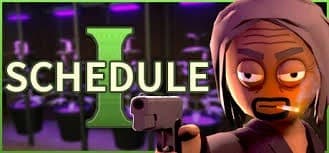
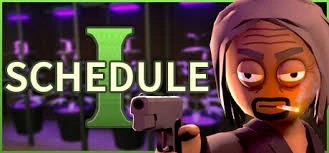
On March 24, 2025, Tyler—operating as TVGS (Tyler's Video Game Studio)—released Schedule 1 into Steam Early Access.
No trailer at Summer Game Fest. No influencer sponsorships. No multi-million dollar marketing campaign.
Just a $15 game about building a drug empire in a fictional city called Hyland Point, with art style reminiscent of Rick and Morty and gameplay mechanics that mixed business management, tactical strategy, and dark comedy.
Within one weekend, Schedule 1 hit 414,000 concurrent players.
By April 6, it peaked at 459,075 concurrent players—surpassing GTA V, Monster Hunter Wilds, and Assassin's Creed Shadows on Steam charts.
By May, according to Alinea Analytics, Schedule 1 had sold 8 million copies and generated nearly $125 million in revenue.
For context: Kingdom Come: Deliverance 2, a critically acclaimed AAA title and Game of the Year contender, sold 3 million copies in three months with a massive marketing budget.
Schedule 1—made by one person—sold nearly triple that in two months.
This isn't just a feel-good indie success story. It's an indictment of everything broken in AAA game development—and proof that players care more about fun than photorealism, more about value than marketing budgets, and more about respect than hype cycles.
The Game: Dark Comedy Meets Business Simulator
Schedule 1 (named after the U.S. classification for controlled substances with high abuse potential) drops players into Hyland Point as a small-time drug dealer aiming to build an empire.
Core gameplay loop:
- Acquire product from suppliers
- Set prices and manage inventory
- Deal with customers (who experience absurd, exaggerated side effects)
- Avoid police attention
- Expand operations
- Hire employees, manage logistics
The tone is deliberately satirical and darkly comedic. Violence is unrealistic and cartoonish. The art style—bright, exaggerated, Rick and Morty-esque—signals that this isn't glorifying drug dealing; it's parodying crime simulator tropes.
Critical and user reception:
- Steam user score: 98% positive ("Overwhelmingly Positive")
- Current reviews (as of December 2025): 97% positive
- Peak concurrent players maintained throughout April-May 2025
- Consistent presence in Steam's top 5 most-played games for two months
The Developer: One Person, Zero Budget
Tyler (TVGS) is a solo Australian developer who built Schedule 1 essentially from his bedroom.
The development reality:
- No team
- No publisher initially
- No marketing budget
- No influencer partnerships pre-launch
- Just Steam's algorithm and word-of-mouth
Tyler's own concerns before launch reveal how uncertain he was about success.
In December 2024—three months before release—Tyler posted on r/GameDev asking:
"Am I kneecapping myself with my game's name? I'm a bit worried that the name 'Schedule I' is a bit niche or vague and may be limiting my audience. Most other similar games have 'drug' or 'narco' in the title."
Redditors weren't particularly encouraging. Multiple responses suggested the name was confusing for international audiences unfamiliar with U.S. drug classification terminology.
One commenter bluntly stated:
"I think it's a pretty poor name."
Tyler stuck with it anyway.
The Launch: Viral Success Through Pure Gameplay
Schedule 1 launched March 24, 2025 with no fanfare.
What happened next shocked everyone—including Tyler:
- Weekend 1 (March 24-26): 414,000 concurrent players
- Week 2 (April 6): All-time peak of 459,075 concurrent players
- April sales: 4.7 million copies (Steam's #1 bestseller for the month)
- Total by May: 8 million copies sold
For comparison:
- Assassin's Creed Shadows (with estimated $400 million development + marketing budget) peaked at under 210,000 concurrent players
- Monster Hunter Wilds was surpassed within days
- GTA V—one of the best-selling games of all time—was consistently beaten on Steam charts
How did this happen with zero marketing?
Steam's discovery algorithm, word-of-mouth, and genuine viral momentum. Players encountered something they hadn't seen in years from AAA studios: a complete game with no microtransactions, no season passes, no paid DLC announced at launch, and genuinely fun gameplay.
Apparently "complete game at launch" is now a selling point rather than the baseline expectation. That's how low AAA gaming has sunk.
Steam reviews captured the sentiment:
"This game looks like it was made in 2012—but I can't stop playing it."
"The jank is real, but so is the fun. Haven't felt this hooked since early GTA."
"No microtransactions. No BS. Just good old-fashioned gameplay."
The Revenue: $125 Million for a Solo Dev
Alinea Analytics reported Schedule 1 generated $125 million in gross revenue by May 2025.
The breakdown:
- 8 million copies × $15 base price = $120 million (before platform fees)
- Steam takes approximately 30% = roughly $36 million to Valve
- Tyler's take before taxes: approximately $84 million
- After taxes (varies by jurisdiction, but assuming ~40%): approximately $50-55 million net
For a solo developer working from home, this is life-changing wealth.
For context:
- MindsEye (covered previously) cost £233 million to develop and sold 160,000 copies
- Assassin's Creed Shadows had a $400 million budget
- Schedule 1 was made by one person for likely under $100,000 in development costs (mostly Tyler's time)
The profit margin is astronomical.
My opinion: This revenue disparity doesn't just expose AAA bloat—it humiliates it. One person generated $50-55 million in profit. Ubisoft spent $400M on Assassin's Creed Shadows and got outsold. Leslie Benzies spent £233M on MindsEye and sold 160,000 copies. Tyler spent maybe $100K and sold 8 million. The numbers aren't just embarrassing for AAA studios—they're a complete repudiation of how modern game development operates. When solo devs consistently achieve better profit margins, faster dev cycles, and higher player satisfaction than 400-person teams, the problem isn't talent. It's structure.
The Controversy: Copyright Claims and Community Backlash
Success brought scrutiny.
On April 3, 2025—just 10 days after launch—Movie Games S.A. (publisher of Drug Dealer Simulator and Drug Dealer Simulator 2) announced they were investigating Schedule 1 for possible copyright infringement.
The Polish company released a statement (translated from Polish):
"MOVIE GAMES SA (17/2025) Decision to commence investigation against the creators of the Schedule 1 production for claims regarding the infringement of the Issuer's IP and related to committing an act of unfair competition against it."
Their claims:
- Schedule 1 allegedly used elements from Drug Dealer Simulator's plot, mechanics, and UI
- The gameplay was "too similar"
- This constituted possible IP infringement
The gaming community's reaction was swift and brutal.
Players immediately:
- Defended TVGS/Tyler across social media
- Review-bombed Drug Dealer Simulator on Steam
- Accused Movie Games of jealousy over Schedule 1's success
- Pointed out that drug-dealing simulators aren't a new concept (text-based versions existed decades ago)
Movie Games quickly backtracked.
In an update to The Gamer, the company clarified:
"There is no lawsuit. We are not preventing TVGS from selling or developing their game."
They emphasized:
- The investigation was routine due diligence
- As a publicly traded company, they could face litigation for negligence if they didn't investigate similarities
- They "emailed [Tyler] best wishes shortly before the release"
- There was "no ill will toward TVGS"
What actually happened:
Movie Games conducted a 10-day preliminary legal analysis, found some similarities (inevitable in any genre), and decided to investigate further before potentially filing suit.
But they made a critical mistake: they disclosed the investigation publicly via press release.
According to Plagiarism Today's analysis:
"There's not much legal benefit to this. It puts TVGS on notice about a potential lawsuit and makes the case a public spectacle before all the facts and evidence are in. I suspect that Movie Games saw the success of Schedule 1 and wanted to ensure they were also in the news cycle."
The move backfired spectacularly.
Instead of gaining sympathy, Movie Games looked like a jealous competitor trying to take down a successful indie developer. Their own game, Drug Dealer Simulator 2, had underperformed. Schedule 1 was thriving.
The optics were terrible.
My take: Movie Games had every right to investigate potential IP infringement—that's responsible due diligence. But announcing it publicly 10 days after launch, before completing any investigation, was obviously motivated by wanting to ride Schedule 1's success in the news cycle. They saw a solo dev making more money in two weeks than their entire studio made all year and couldn't resist announcing they were "looking into it." The community saw through it immediately. The review bombing was harsh but predictable—nobody likes watching an established company try to kneecap an indie success story with vague legal threats.
As of December 2025, no lawsuit has been filed. The investigation appears to have quietly ended.
The Broader Pattern: Indie Games Dominating 2025
Schedule 1 isn't an isolated phenomenon.
Other 2025 indie breakout hits:
- Lethal Company (2024 carryover momentum)
- Balatro (poker roguelike)
- Vampire Survivors (still going strong)
- Blue Prince (puzzle game)
- Clair Obscur: Expedition 33 (won Game of the Year at The Game Awards 2025—first debut game ever to win)
- Arc Raiders (peaked at 500,000 concurrent on Steam)
- R.E.P.O. (asymmetrical horror, 3.7 million copies in April)
According to Gamigion's industry analysis:
"III and AA games exploded on Steam, allowing people fantastic experiences at lower price points in numbers I've not seen in previous years. Titles like Schedule 1 and Clair Obscur are great examples that show you don't need $200M budgets to win players' attention or revenue."
What Schedule 1 Reveals About AAA Gaming's Problems
Schedule 1's success isn't just about one game—it's a symptom of deeper issues in AAA development.
1. Bloated Budgets, Diminishing Returns
When Assassin's Creed Shadows costs $400 million, takes 5+ years to develop, and gets outperformed in both sales and concurrent players by a $15 indie game made in Tyler's bedroom, the question stops being rhetorical: what is all that money actually buying? The answer appears to be: marketing budgets, bureaucracy, and diminishing returns on visual fidelity that 98% of players don't care about.
- Massive teams (400+ people)
- Years of development (5-8 years for major AAA titles)
- Expensive mocap and voice acting
- Marketing budgets rivaling Hollywood films
Yet Schedule 1—made by one person in likely 2-3 years—delivered more player engagement, better word-of-mouth, and higher profit margins.
Maybe those 400-person teams are spending most of their time in meetings about what color the UI should be.
2. Microtransaction Fatigue
Schedule 1 costs $15. You get the complete game. No season passes, no battle passes, no $70 base price plus $30 DLC roadmap.
AAA publishers have trained players to expect:
- $70 base price
- $30-40 season pass
- Microtransactions for cosmetics
- "Deluxe editions" with content that should've been in the base game
Players are exhausted. Schedule 1 offered a refreshing alternative: pay once, own the game, get updates for free.
You know your industry's broken when "pay $15, get the whole game" feels revolutionary.
3. Creative Risk Aversion
AAA studios chase "proven" formulas. Open-world Ubisoft-style games. Live-service shooters. Franchise sequels.
Tyler made a game about dealing drugs with Rick and Morty aesthetics and absurd humor. It's weird. It's niche. No AAA publisher would greenlight it—too risky, too unconventional, doesn't fit established franchise templates. And it sold 8 million copies while AAA "safe bets" with $400M budgets underperformed. The risk-averse strategy is riskier than actual creative risk-taking. But AAA studios won't learn that lesson because admitting it would require admitting the entire model is backwards.
4. Development Efficiency
One developer, working alone, shipped a functional, engaging game that millions enjoyed.
Meanwhile, Build a Rocket Boy (covered in the MindsEye article) had 400 employees, £233 million in funding, and eight years—and produced a broken mess that sold 160,000 copies.
The efficiency disparity is staggering. Tyler made a better game in his bedroom than Leslie Benzies made with GTA-level funding and a small army of developers. Let that sink in.
My opinion: AAA development has become so bureaucratic, so risk-averse, and so bloated that it's lost the ability to innovate quickly. Solo developers and small teams can iterate, pivot, and respond to player feedback in ways that 400-person studios drowning in committees simply can't.
This doesn't mean AAA games are dead—but it does mean the model is fundamentally broken when a bedroom developer consistently outperforms studios with 100x the resources.
The Aftermath: What Tyler Did Next
Schedule 1 remains in Early Access as of December 2025. Tyler has released multiple content updates including:
- New gameplay features
- Quality-of-life improvements
- Employee locker system (replacing beds to save space)
- Ongoing roadmap: fishing, shooting mechanics, mini-games
Schedule 1 was temporarily removed from Steam in Australia in May 2025 due to lack of required age rating. Tyler reassured fans it would return (and it did).
Tyler hasn't publicly commented on the $50+ million windfall or what comes next. Based on his Reddit activity pre-launch, he seems genuinely humble and surprised by the success.
The Lesson: Players Want Good Games, Not Good Graphics
Schedule 1 doesn't have cutting-edge graphics. It doesn't have ray tracing. It doesn't have photorealistic character models or massive open worlds with thousands of NPCs.
It has:
- Tight gameplay loop
- Clear progression
- Dark humor
- No predatory monetization
- Complete experience at launch
- Regular updates based on player feedback
And that was enough to beat games that cost 1000x more to make.
The gaming industry is at an inflection point. AAA publishers can either:
- Adapt: Reduce budgets, increase creative risk-taking, stop nickel-and-diming players
- Ignore the trend: Keep making $400 million games with 8-year dev cycles and watch indie games continue eating their lunch
Schedule 1 proves that players don't need photorealism or massive marketing campaigns. They need games that respect their time, money, and intelligence.
Whether AAA publishers learn that lesson remains to be seen.
But if they don't, more Tylers will emerge—solo developers with good ideas, no corporate overhead, and the ability to ship games faster and cheaper than studios with 400 people and $400 million. And every time one of them outsells a AAA blockbuster, the industry's excuses for bloated budgets and decade-long dev cycles sound a little more hollow.
Schedule 1 didn't just succeed. It exposed AAA gaming's core weakness: all that money, all those employees, all that infrastructure—and they can't compete with one person who actually cares about making a fun game at a fair price.
Sources: Medium, YourStory, Game Rant, SteamDB, Alinea Analytics, PC Gamer, Plagiarism Today, Destructoid, Insider Gaming, The Gamer, Gamigion, Steam user reviews, Reddit r/GameDev