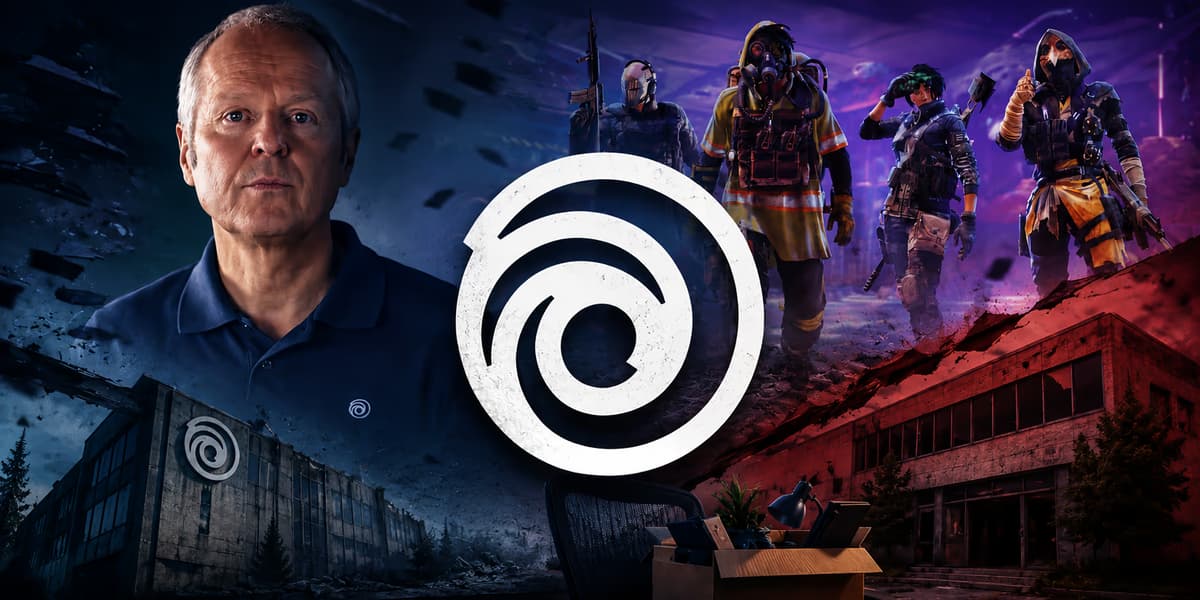
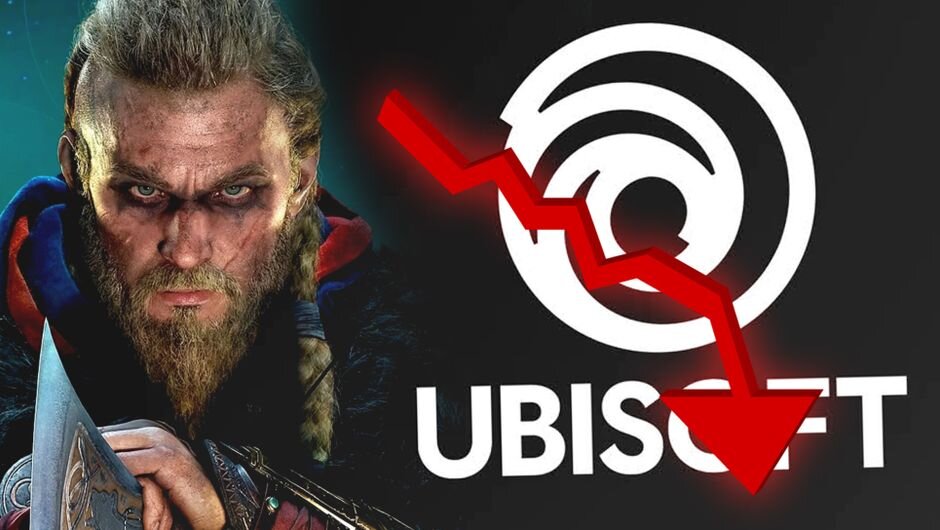
Thirteen days into January, Ubisoft announced another round of layoffs.
Fifty-five employees at Massive Entertainment and Ubisoft Stockholm are losing their jobs—the company calls it "organizational restructure," though I'm not sure what gets restructured when you just have fewer people doing the same work.
Last week they closed Halifax entirely. Seventy-one positions gone, twenty days after those workers unionized.
That's 126 people in two weeks. I keep checking if I've miscounted. I haven't.
I've been tracking Ubisoft's implosion since the workplace harassment scandal broke in 2020—three executives eventually convicted, CEO never testified, the usual story. Then came the stock collapse (85% down from 2021 peak), the Tencent deal that looked suspiciously designed to protect Guillemot family control, and now this: systematic workforce reduction while the CEO tells investors AI is "as big a revolution as the shift to 3D."
Maybe I'm reading too much into the timing. But when a company lays off 1,500 people in twelve months while celebrating AI adoption across all studios, the connection seems... obvious? Uncomfortable? Something.
Let me walk through what actually happened here, because the corporate announcement buries most of it.
What Happened at Massive (And What They're Not Saying)
The internal email to Massive and Stockholm employees, obtained by IGN:
"Earlier today, we informed all employees in our Swedish studios about a proposed organizational restructure that may affect approximately 55 roles across Malmö and Stockholm."
I had to read that twice. "Proposed organizational restructure" and "may affect" are doing heavy lifting—these are definite layoffs affecting specific people, but the language makes it sound tentative and technical instead of what it is: 55 people losing jobs.
The email continues: "This restructure follows the completion of the Voluntary Leave Program launched during the fall of 2025..."
That's the part worth unpacking.
October 2025: Massive announced a voluntary buyout program. From their statement at the time: "We have recently realigned our teams and resources to strengthen our roadmap, ensuring our continued focus on The Division franchise..."
GamesIndustry.biz reported it "had some takeup"—which in corporate journalism usually means "not nearly enough people quit."
January 2026: Not enough people left voluntarily, so Ubisoft made it involuntary.
Here's my read: Finance set a headcount reduction target. Management offered buyouts hoping to hit that number through attrition. When that failed, they forced the cuts anyway. The "voluntary program" wasn't really about employee choice—it was about optics. Firing 55 people looks worse than "offering career transition opportunities."
Though honestly, firing 55 people after the voluntary program failed might look even worse.
The Studios Being Cut
Massive Entertainment shipped The Division (2016), The Division 2 (2019, ongoing live service), Avatar: Frontiers of Pandora (2023), and Star Wars Outlaws (2024). They're actively working on The Division 3, some kind of Division 2 extraction mode, mobile Division projects, plus Snowdrop engine development that powers multiple Ubisoft games.
Ubisoft Stockholm focuses on experimental tech—cloud platforms, next-gen R&D, that kind of thing.
So these aren't struggling support studios. They're productive teams working on active franchises and core technology.
The email claims "the long-term direction for the studios remains unchanged." Which raises an obvious question: if direction is unchanged but you have 55 fewer people, either those people weren't contributing much (seems unlikely for busy studios), or you're expecting everyone else to absorb their work.
Neither scenario is great. One implies you were overstaffed for years. The other implies incoming crunch.
I'm betting on the second one, but I could be wrong.
The 1,500 Number That Keeps Growing
Ubisoft's November 2025 financial report confirmed 1,500 "departures" in the twelve months ending September 30, 2025. That's their word—"departures"—which lumps together layoffs, voluntary buyouts, and people who just quit, making it impossible to know exactly how many were forced out.
What we do know:
- November 2023: 124 positions eliminated
- December 2024: 277 (XDefiant shutdown, closed San Francisco and Osaka studios)
- January 2025: 185 (Leamington UK closure, plus other cuts)
- September 2025: 700 (no breakdown provided)
- January 2026: 71 (Halifax) + 55 (Massive/Stockholm) = 126 so far
That's over 2,000 documented layoffs since late 2023, and we're probably undercounting because Ubisoft doesn't break down all the numbers.
Headcount went from 18,597 (September 2024) to 17,097 (September 2025)—an 8% drop in one year.
For context: when analysts see 10% workforce reduction in under two years at a company trading below its debt value, they start using phrases like "distressed asset" and "potential acquisition target." We're in that territory now.
The AI Thing I Can't Stop Thinking About
November 2025 earnings call, CEO Yves Guillemot speaking to investors:
"We are making great strides in applying Gen AI to high-value use cases that bring tangible benefits to our players and teams. It's as big as a revolution for our industry as the shift to 3D."
"Teams in all our studios and offices embracing this new technology and constantly exploring new use cases in programming, art and overall game quality."
Look, I'm trying not to draw simplistic conclusions here. Correlation isn't causation, companies can adopt AI AND maintain headcount, there are legitimate efficiency gains, etc.
But.
Guillemot says AI is revolutionary. Guillemot laid off 1,500 people in twelve months. Guillemot says "all studios" are embracing AI. Fifty-five more people just got fired from studios "embracing" that technology.
Maybe those things aren't connected. Maybe Ubisoft would've done these layoffs regardless of AI adoption. Maybe the timing is coincidental.
Or maybe "high-value use cases" includes "we need fewer concept artists when we have Midjourney" and "programmers assisted by Copilot can handle more workload per person."
I don't have internal documents proving that. I'm not even sure I could prove it if I did—Ubisoft would never publicly state "we're replacing humans with AI," they'd talk about "productivity enhancements" and "efficiency gains."
But when a CEO celebrates AI adoption across all studios while simultaneously eliminating 8% of the workforce, it's hard not to see the pattern.
The 2D-to-3D transition he's comparing this to? That created jobs. Studios hired 3D modelers, texture artists, animators. AI seems to be doing the opposite—consolidating work so fewer people can do more.
Whether that's good or bad depends on whether you're a shareholder enjoying cost savings or an employee wondering if your job still exists next quarter. Ubisoft leadership has made clear which side they prioritize.
The Financial Mess Driving This
Ubisoft's November 2025 financials:
- Net debt: €1.15 billion
- Net losses (FY2025): €161.4 million
- Market cap (December 2025): ~€950 million
Their debt exceeds their market value. That's not a warning sign. That's a flashing exit sign.
Revenue breakdown is even more concerning: 96% of bookings come from catalog titles—old games like Assassin's Creed back catalog, Rainbow Six Siege, The Division 2. New releases aren't driving growth.
Star Wars Outlaws underperformed badly enough to force revenue forecast cuts from €2.3 billion to €1.95 billion—a €350 million miss.
Assassin's Creed Shadows launched in March 2025 with strong Day One sales (second-highest in franchise history), but that temporary spike didn't fix underlying problems.
So Ubisoft's burning money, buried in debt, dependent on old games for revenue, and new releases keep missing targets.
Cost-cutting makes sense in that context. Layoffs reduce expenses quickly. They don't fix why games underperform or why the business model is broken, but they make quarterly earnings look less catastrophic.
Whether that's a sustainable strategy or just delaying the inevitable—I honestly don't know. Probably the latter, but I'm not a financial analyst.
The Cost-Cutting Program (And What It Costs)
Ubisoft's November report celebrated hitting their €200 million cost reduction target (compared to FY2023) ahead of schedule. Next phase: another €100 million in cuts by FY2027.
Total planned reduction: €300 million over four years.
How do you cut €300 million? There aren't that many options. Executive compensation barely makes a dent at that scale. You can cancel projects (they've done that—XDefiant, others unannounced). But the biggest lever is workforce reduction.
Two thousand employees at €50-80K average salaries equals roughly €100-160 million in annual labor costs. That math explains a lot.
I'm not saying it's the only factor. Ubisoft genuinely has financial problems that require cost discipline. But when the solution is overwhelmingly "fire people" rather than "fix why games underperform" or "address why debt keeps growing," it starts feeling like treating symptoms instead of disease.
Symptoms are easier to treat. They're also easier to blame on someone else.
What This Means For People Still There
Sweden has strong labor protections. These aren't overnight terminations—there are notice periods (probably 1-3 months depending on tenure), severance calculations, union consultation requirements if applicable.
Which means those 55 people have been living with uncertainty since October when the voluntary program started. Three months of watching colleagues take buyouts, wondering if you're next, still expected to work on The Division 3 and other projects.
The email says explicitly: "These proposed changes are forward-looking and structural, they are not related to individual performance, recent deliveries, or the quality of the work produced."
Translation: you did good work, your performance is fine, we're eliminating you anyway because the spreadsheet demands it.
That's got to be demoralizing. Not just for the 55 being let go, but for everyone remaining who knows their job security depends on financial targets, not work quality. Do excellent work, ship successful games, build the engine that powers your competitor's projects—none of it protects you when someone decides headcount needs to shrink.
For Halifax's 71 employees, the timeline was even more compressed: unionized December 18, closure announced January 7. Twenty days from "we're organizing for job security" to "everyone's fired."
I covered that separately. Still processing it, honestly.
Pattern Recognition (Or Maybe I'm Seeing Patterns That Aren't There)
XDefiant failed to retain players → shutdown, 277 laid off. Clear cause-and-effect.
Tango Gameworks (Microsoft, not Ubisoft) delivered Hi-Fi Rush, a critical and commercial success → closed anyway. Success didn't matter.
Halifax had active mobile projects → closed 20 days after unionizing. Organizing didn't protect them.
Massive delivered Star Wars, Avatar, Division franchise → 55 laid off mid-development. Quality work didn't guarantee safety.
The common thread seems to be that performance—good or bad—matters less than cost-cutting targets and whatever other factors executives consider when making these decisions.
Or maybe I'm oversimplifying. These could all have separate justifications I'm not seeing. XDefiant genuinely failed. Tango might've had cultural fit issues at Microsoft. Halifax might've been planned for closure long before unionization (though Ubisoft won't provide a timeline proving that). Massive's cuts might be strategic reallocation I don't understand.
I just keep noticing that whether you succeed or fail, organize or don't, deliver quality or miss targets—layoffs find you anyway if finance decides headcount needs reducing.
That might be how modern corporations work. Doesn't make it less depressing.
What Probably Happens Next
Ubisoft's stated plans include another €100 million in cost cuts by FY2027, "leading" on AI adoption, and focusing on proven franchises.
Which likely means: more layoffs coming, more AI replacing human work, less creative risk-taking, more sequels.
Tencent's growing influence via the Vantage Studios deal (where they invested €1.16 billion for 26%+ stake in Assassin's Creed/Far Cry/Rainbow Six) probably accelerates that. Though predicting Tencent's intentions is difficult—they could push for aggressive monetization, or patient long-term value building, or eventual full acquisition. Hard to say.
The optimistic scenario: Ubisoft stabilizes at lower headcount, produces profitable games, debt gets managed, no more mass layoffs.
The realistic scenario: quarterly cuts continue, more studios close, AI progressively handles more development work, eventual Tencent acquisition of the whole company.
The pessimistic scenario: Ubisoft becomes a cautionary tale about what happens when debt, mismanagement, and market shifts collide—gutted until only IP licenses remain.
I'm betting somewhere between realistic and pessimistic, but that's speculation.
The Bottom Line (Such As It Is)
A hundred twenty-six people lost jobs in the first thirteen days of 2026.
Fifteen hundred employees were eliminated in the past twelve months.
Ubisoft plans another €100 million in cost cuts.
The CEO celebrates AI adoption while headcount shrinks.
Debt exceeds market value.
Revenue depends on old games, not new releases.
And Yves Guillemot—who presided over executives convicted of harassment, never testified at their trial, told employees "the ball is in your court" to fix financial problems, closed a unionized studio twenty days after certification—remains CEO.
His son just became co-chief of the Tencent subsidiary holding Ubisoft's most valuable franchises. The Guillemots protect their own. Everyone else is a line item.
I don't have a clean conclusion here. This isn't a story with a satisfying ending or a clear villain or a simple lesson.
It's just... a company that seems to be eating itself from the inside while leadership talks about revolutionary AI and strategic restructuring. Whether that saves Ubisoft or finishes destroying it—we'll find out over the next year or two.
For the 126 people laid off this month: your work was good, your performance wasn't the issue, and I'm sorry the industry works this way.
For everyone still there: I genuinely don't know if your jobs are safe or if you're next. Neither do you. And that uncertainty is probably the worst part.
For Guillemot: history will have its say eventually. Thirty-seven years as CEO, three executives convicted under your watch, stock down 85%, 2,000+ people laid off. One of those approaches earns legacy. The other earns case studies in business school. I suspect you'll be the latter.
Sources: IGN (January 13, 2026), GamesIndustry.biz, PC Gamer, Kotaku, Game Developer, VGC, Ubisoft H1 FY2025-26 financial report (November 2025), Game File (Guillemot AI quotes), previous GameHazards coverage. All figures from public financial disclosures and press releases.